The Core Problem with Timber Outdoors
Timber is a natural material. That's its beauty — and its fundamental weakness.
When timber is exposed to the conditions that define outdoor use in the UK — persistent moisture, freeze-thaw cycles, soil contact, UV, biological activity — it starts to lose. Not immediately. But consistently, and eventually expensively.
Recycled plastic doesn't have that problem. Not because it's treated against it. Because the material itself is simply not susceptible to any of those conditions.
Here's what the evidence looks like in practice.
Moisture: The Primary Killer of Timber
Timber absorbs water. This is not a defect or a failure of treatment — it is what wood does. The cellular structure of timber is designed to transport and store moisture. Once installed outdoors, that same structure becomes a liability.
What moisture does to timber:
- Causes dimensional swelling and shrinkage with each wet/dry cycle, leading to warping, cupping, and joint failure
- Creates conditions for fungal decay — even pressure-treated timber is rated for 15–25 years in ground contact, not indefinitely
- Carries bacteria and mould deep into the grain, where surface cleaning cannot reach
- Accelerates rot when in contact with soil, standing water, or constant splash zones
What moisture does to recycled plastic:
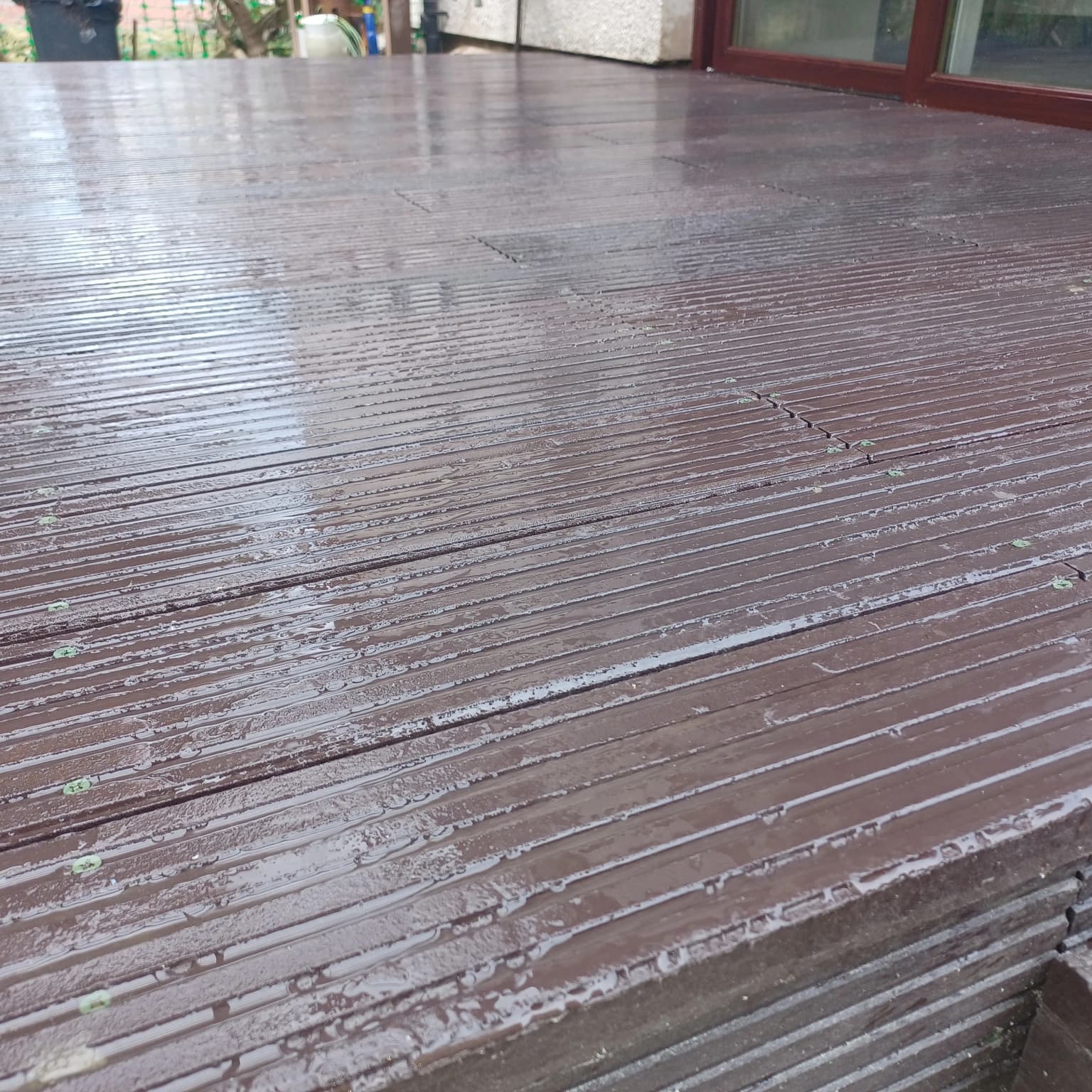
Nothing. Recycled plastic is a closed-cell, non-porous solid. It does not absorb water at any measurable rate. It does not swell, shrink, warp, or delaminate. It cannot rot because it contains no organic material for fungi to break down.
In the wettest, most challenging UK conditions — coastal sites, waterlogged ground, equestrian yards — recycled plastic performs identically to how it did on day one.
Rot Resistance: Facts, Not Marketing
"Treated timber" is frequently cited as a durable alternative to untreated wood. And it is — up to a point.
Pressure-treated (CCA or ACQ-treated) softwood is rated to:
- Use Class 3 (above ground, regularly wetted): 15–20 years
- Use Class 4 (in-ground contact): 15–25 years under ideal conditions
These are industry-standard ratings. They are not worst-case scenarios. And they assume correctly specified timber, properly installed, in clean conditions.
Real-world installations — especially in agricultural, equestrian, and coastal environments — routinely see timber fail earlier than rated life expectancy.
Recycled plastic has no analogous decay mechanism. There is no fungal attack, no insect infestation, no chemical breakdown from soil acids or saltwater. The material maintains its structural properties for the full expected lifespan.
Independently tested lifespan for recycled plastic structural profiles: 25+ years.
UV and Weather Resistance
UV degradation is one of the more visible failure modes for outdoor materials. With timber, prolonged UV exposure causes surface oxidation (greying), surface checking (fine surface cracks), and ultimately a rougher, more absorbent surface that is more susceptible to moisture ingress.
Recycled plastic profiles manufactured for outdoor use incorporate UV stabilisers in the material mix. These are not surface coatings — they are compounded into the body of the profile. This means:
- No peeling, flaking, or surface degradation
- Colour may fade slightly over many years but structural integrity is unaffected
- No re-coating required
Temperature cycling is handled equally well. Recycled plastic profiles are rated from -20°C to +50°C operational range — covering the full spectrum of UK conditions including extreme winter cold and summer heat in enclosed or south-facing installations.
Lifecycle Cost: Where the Numbers Land
The higher upfront cost of recycled plastic versus timber is the first thing buyers notice, and rightly question. The answer lies in what happens after installation.
Garden Decking (4m × 3m, 12m²)
| Cost Factor | Timber Joists | Recycled Plastic Joists |
|---|---|---|
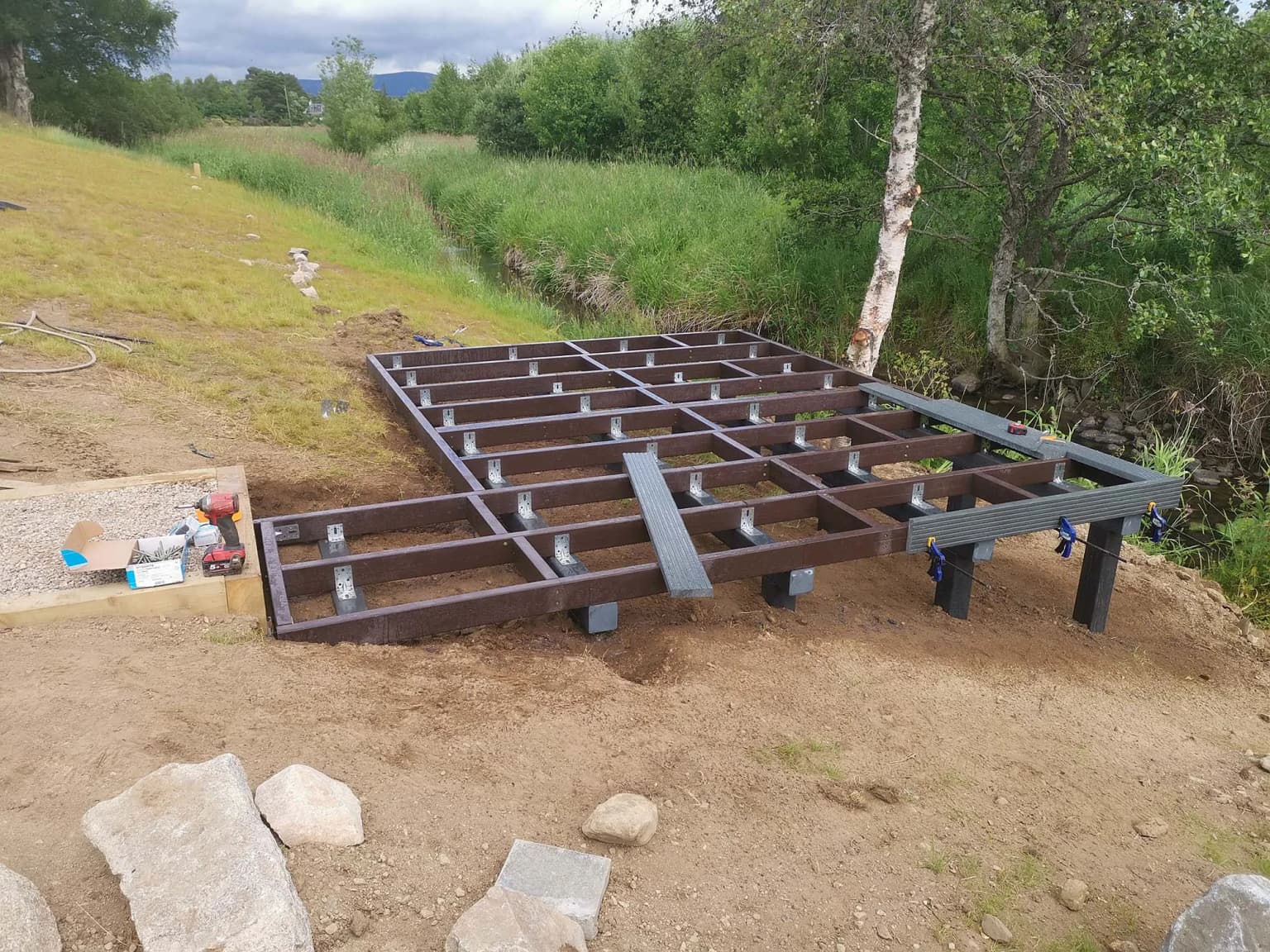
| Initial material | £120 | £240 |
| Installation labour | £200 | £200 |
| Maintenance (staining, inspection) | £50/year × 25 years = £1,250 | £0 |
| Replacement (structural failure) | £320 × 1 replacement = £320 | £0 |
| 25-year total | £1,890 | £440 |
Saving: £1,450 over 25 years (77% lower).
Agricultural Fencing (100m field boundary)
| Cost Factor | Timber | Recycled Plastic |
|---|---|---|
| Initial materials | £1,000 | £2,200 |
| Installation | £1,200 | £1,200 |
| Maintenance (re-treating, inspections) | £150/year × 25 = £3,750 | £0 |
| Replacements (posts, rails) | £1,500 (over 25 years) | £0 |
| 25-year total | £7,450 | £3,400 |
Saving: £4,050 over 25 years (54% lower).
These figures reflect real-world maintenance burdens, not theoretical minimums. The crossover point — where the recycled plastic installation has paid back its higher upfront cost — typically occurs between years 6 and 10, depending on application.
Maintenance Burden: The Hidden Cost
Lifecycle cost tables don't fully capture the operational reality of timber maintenance. Timber requires:
- Annual inspection for signs of rot, splitting, or structural compromise
- Regular retreatment with preservatives, stains, or paint (typically every 2–3 years)
- Active monitoring for pest activity (particularly in agricultural settings)
- Periodic partial replacement as sections fail ahead of others
Each of these activities has a direct cost (materials, labour) and an indirect cost (time, disruption, planning).
Recycled plastic requires none of them. The maintenance schedule is: wash when dirty.
Where Recycled Plastic Particularly Outperforms Timber
Not every application creates equal stress on materials. The performance gap between recycled plastic and timber is most pronounced in:
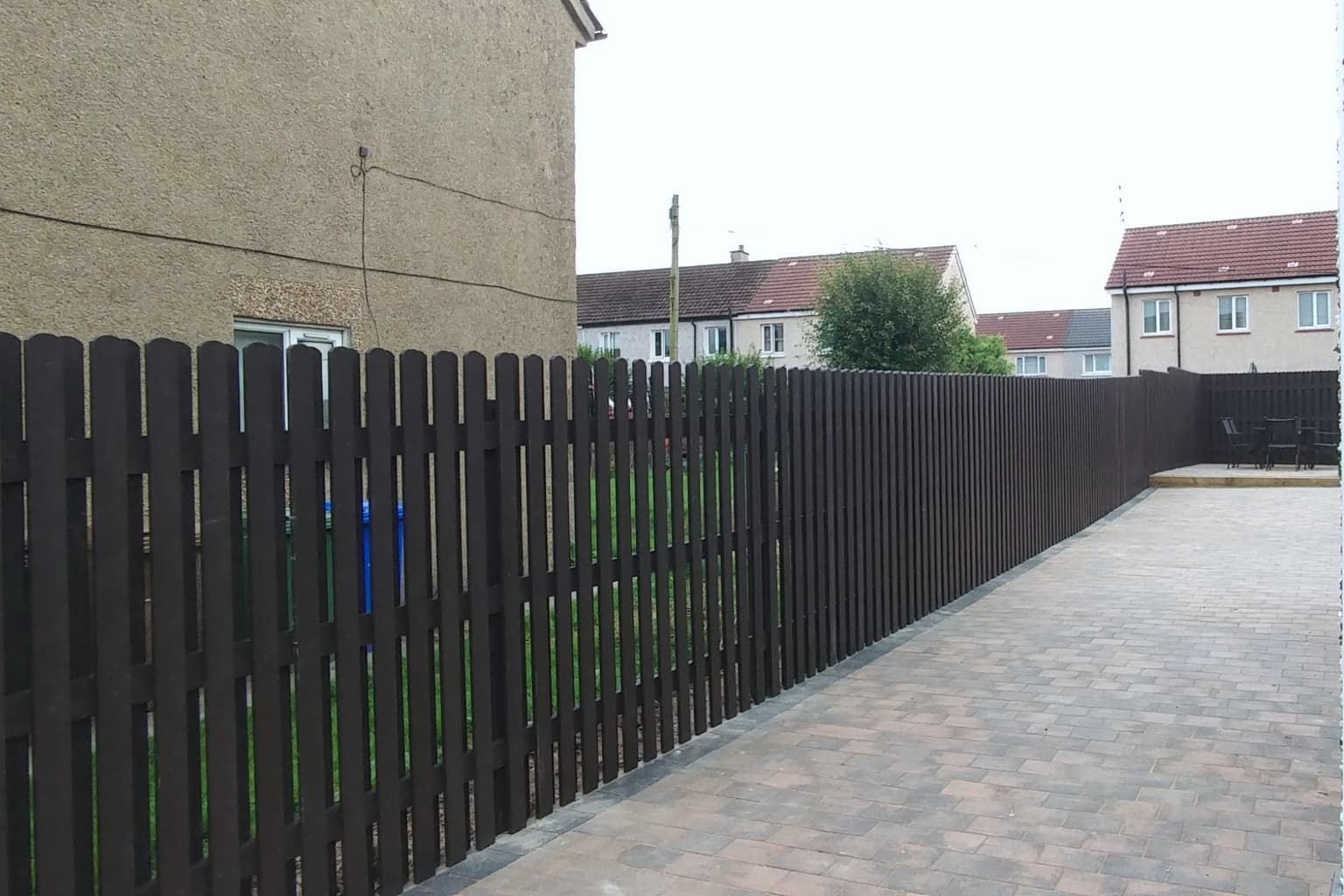
Ground contact and soil-adjacent applications — fence posts, raised bed walls, retaining structures. Timber in contact with soil is subject to the highest biological attack pressure. Recycled plastic is unaffected.
Permanently wet environments — jetties, waterfront boardwalks, drainage channel covers, canal tow paths. Continuous moisture exposure accelerates timber decay dramatically. Recycled plastic is unaffected.
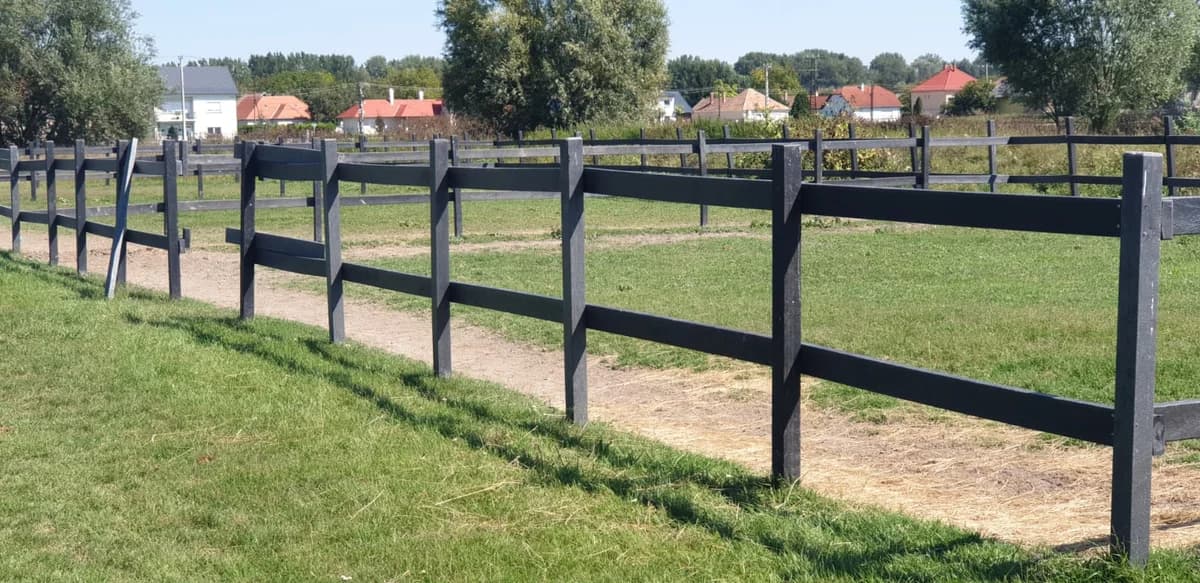
Agricultural and equestrian use — stable boards, livestock enclosures, yard fencing. High-ammonia, high-moisture environments cause rapid timber deterioration. Recycled plastic is unaffected.
Coastal installations — salt spray accelerates corrosion in metal fixings and surface degradation in timber. Recycled plastic is salt-resistant and performs identically to inland installations.
The Sustainability Case
Beyond performance, recycled plastic profiles deliver a measurable environmental benefit that timber — even sustainably sourced timber — cannot match in these applications.
- Each kilogram of recycled plastic used diverts the equivalent weight of plastic waste from landfill or incineration
- No deforestation or forest management burden
- No chemical preservative treatments — no toxic runoff into soil or watercourses
- Fully recyclable at end of life (which, at 25+ years, is a distant consideration)
For projects where environmental credentials matter — farm assurance schemes, planning conditions, CSR commitments — the recycled content is verifiable and documentable.
The Bottom Line
Recycled plastic is not a like-for-like substitute for timber with better marketing. It is a fundamentally different material category that solves the problems timber creates in outdoor structural applications.
It costs more upfront. It costs substantially less over any meaningful operational timeframe. And it removes the maintenance burden entirely.
For outdoor structures intended to last — build them once, in recycled plastic.
View our recycled plastic profiles and section sizes
Request a quote for your project
Keep Reading
- Recycled Plastic vs Timber: The Complete Comparison for UK Construction Projects
- Solid Plastic Decking Boards: The Ultimate Maintenance-Free Solution
- Agricultural Fencing with Recycled Plastic: Why UK Farmers Are Making the Switch
Shop Related Products
Ezotrade Ltd — 100% recycled plastic building materials, supplied across the UK.