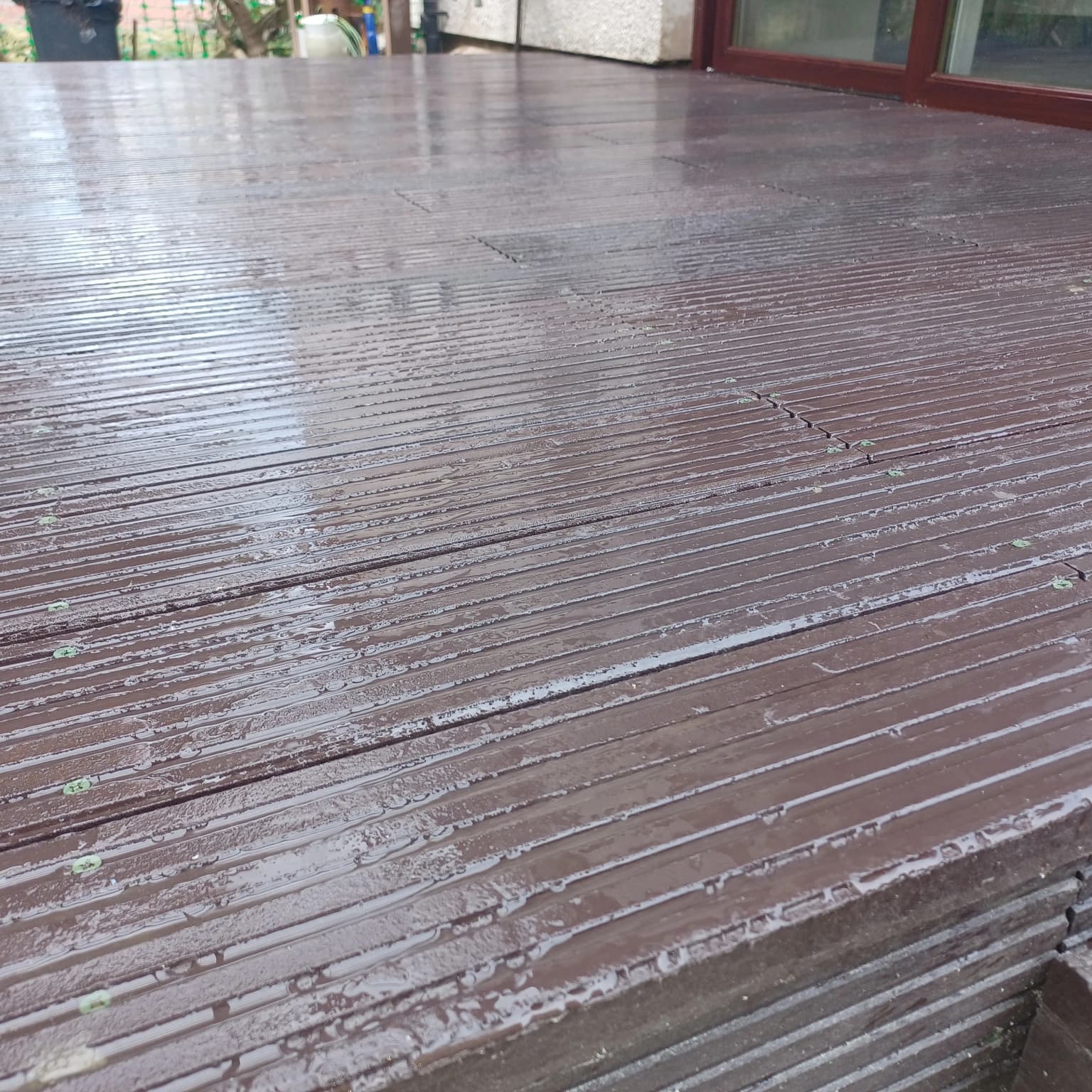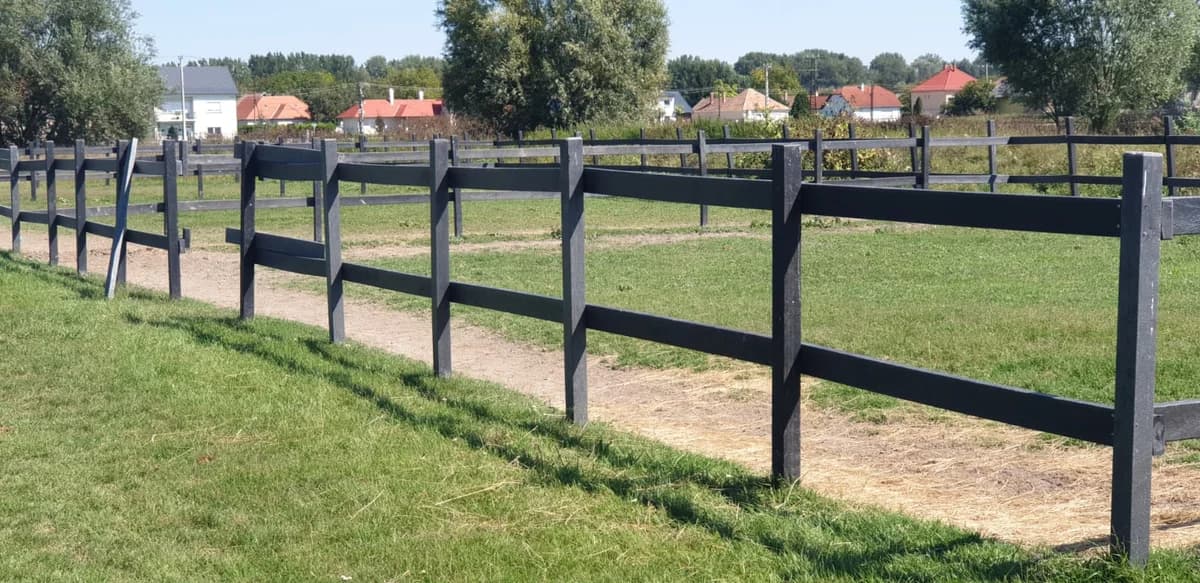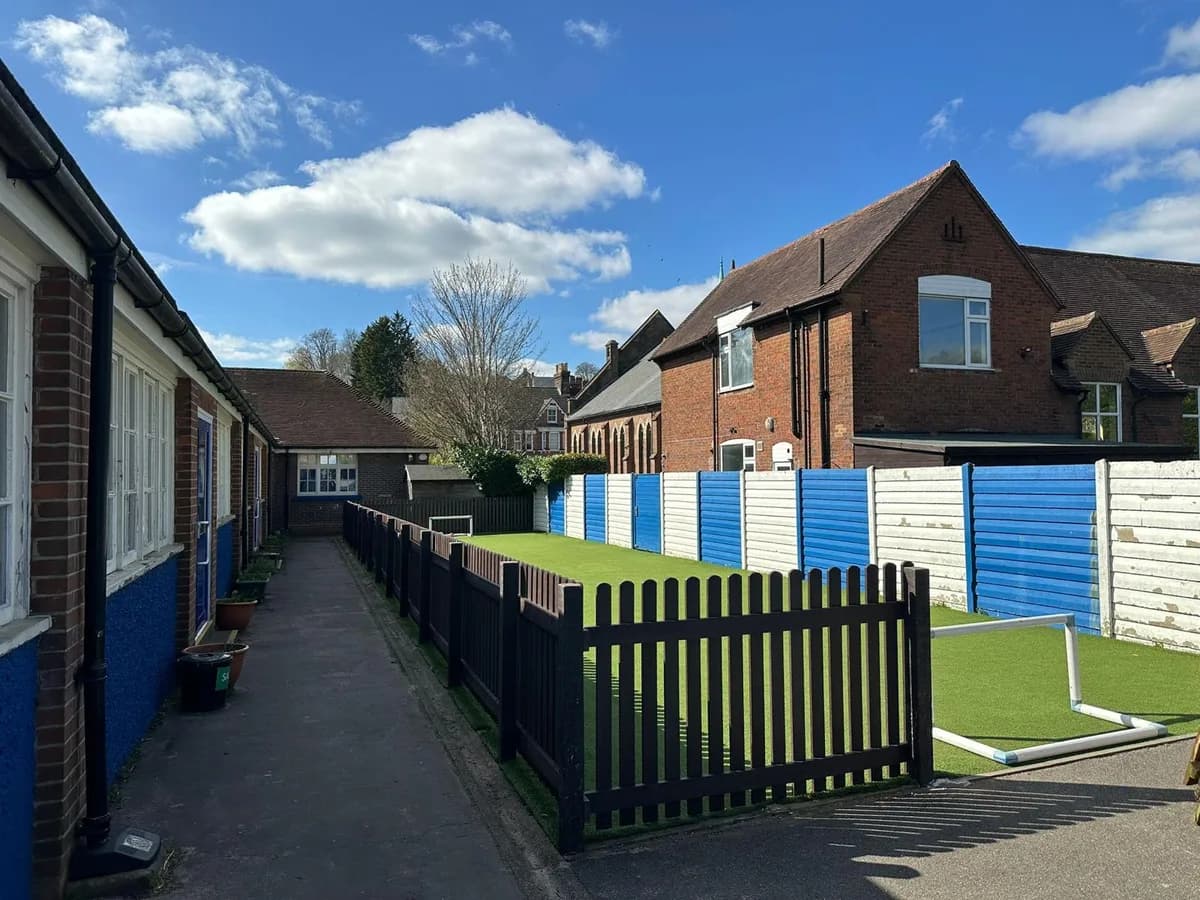
Most decking projects fail from the bottom up.
The board gets all the attention — the colour, the profile, the finish. The subframe is an afterthought. A box to tick, a cost to minimise. Until the deck starts bouncing, the fixings start pulling, and you lift a board to find that the joists underneath have been quietly rotting for years.
The frame is the most important decision in any decking project. Get it wrong and nothing above it matters.
What a Decking Subframe Actually Does
The subframe carries the entire load of the deck — foot traffic, furniture, planters, everything. It determines whether boards stay flat and gap-consistent over years of seasonal movement, whether fixings hold, and whether the structure remains safe.
A subframe that moves — because it's absorbing moisture, swelling and shrinking with the seasons — transfers that movement directly to the boards above. Gaps open and close. Boards lift at the ends. Fixings loosen. None of this is a board problem. It's a frame problem.
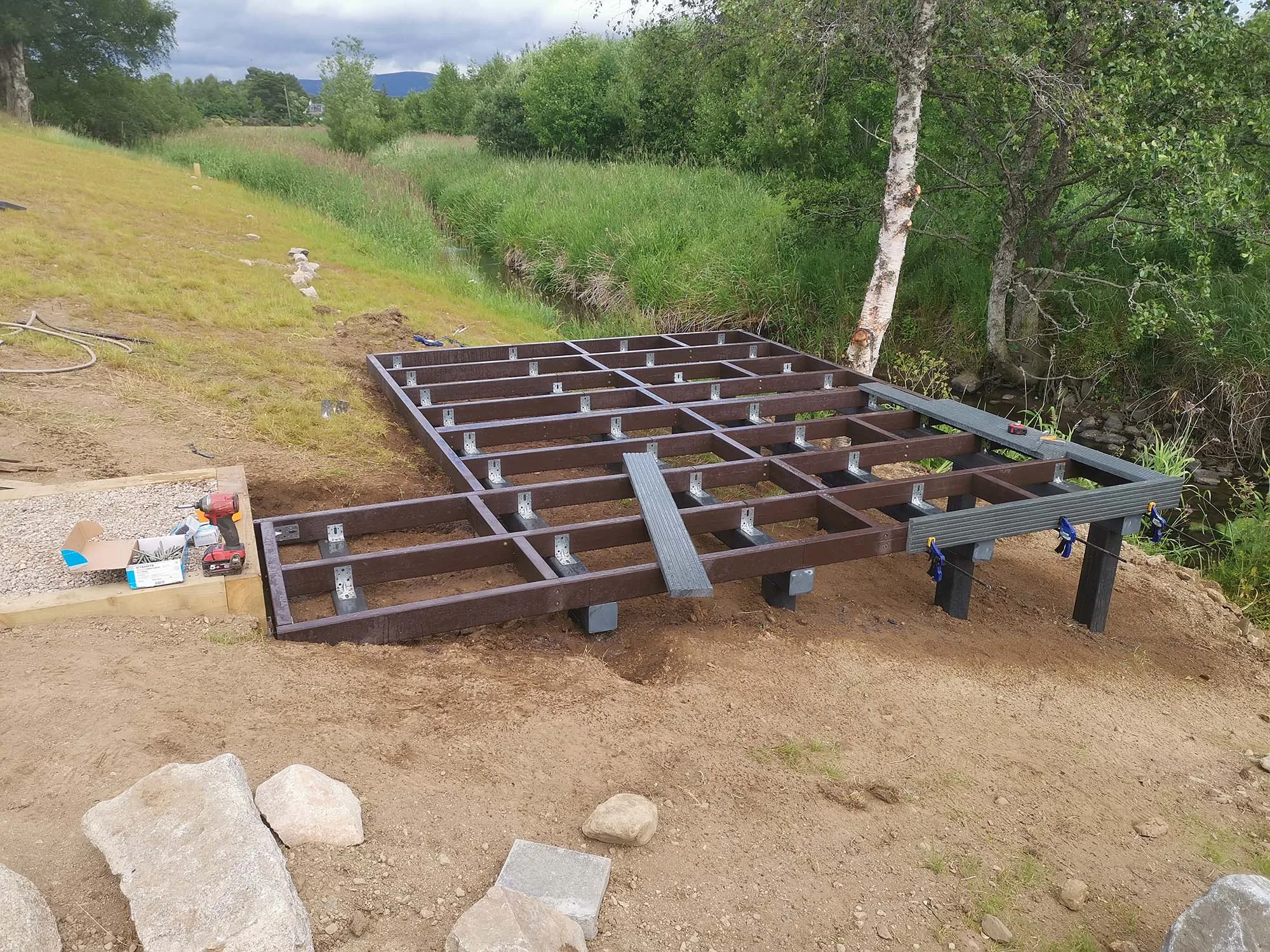
Why Timber Joists Fail in UK Conditions
The UK climate is exactly what timber joists struggle with most. Persistent ground moisture. Wet winters. Freeze-thaw cycles. Even tanalised (pressure-treated) timber in ground contact begins to degrade over time — the treatment slows the process, it doesn't stop it.
In practice:
- Year 1–3: joist looks fine
- Year 3–5: moisture absorption begins to cause movement
- Year 5–8: rot establishes at the base and ground contact points
- Year 8–12: structural integrity compromised, boards affected above
By the time you see the problem on the surface — boards lifting, deck bouncing, fixings pulling through — the frame underneath has often been failing for years. The only fix is a full rebuild.
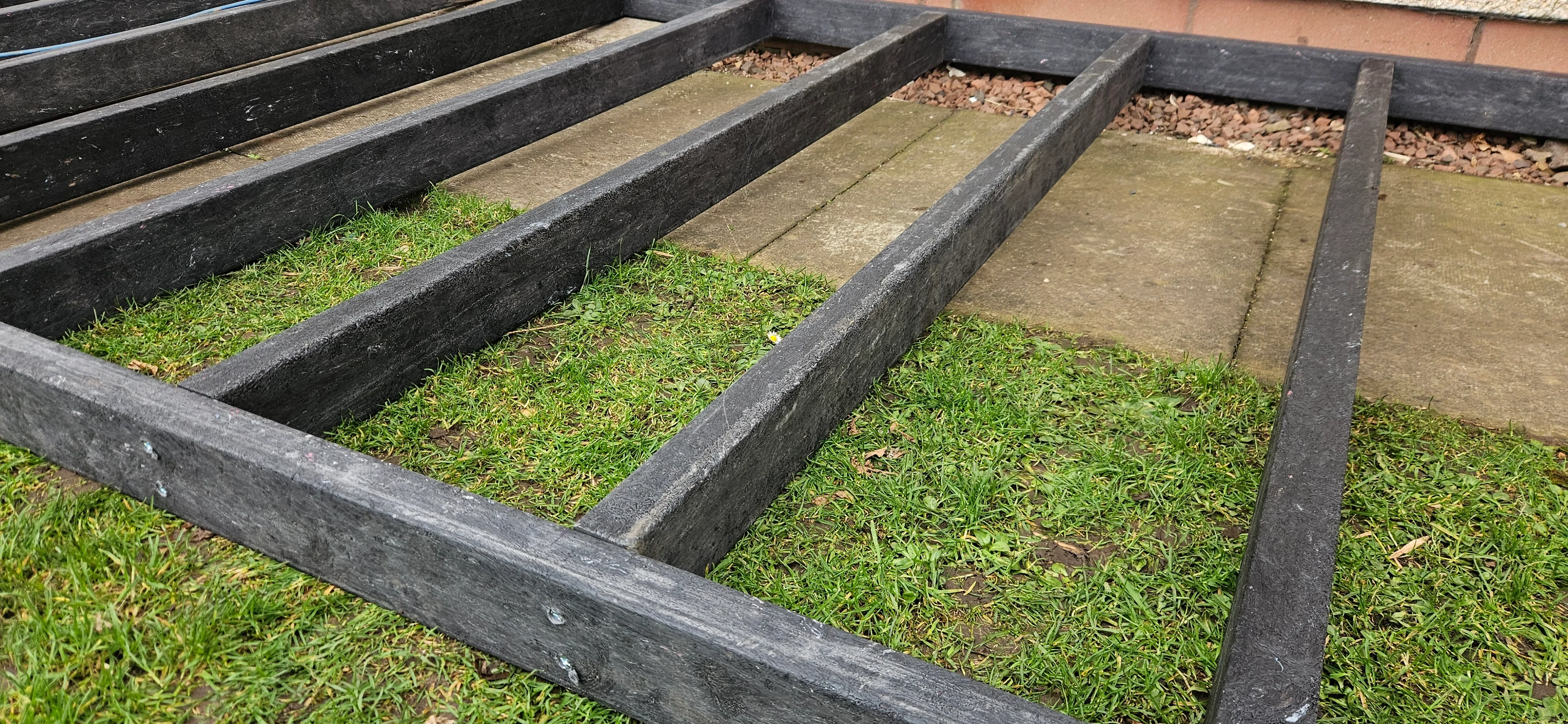
Why Recycled Plastic Joists Are Different
Recycled plastic joists are non-porous. They contain no wood fibre, no cellulose, nothing that absorbs moisture. They can sit in direct ground contact indefinitely without degrading.
In the UK climate, that means:
- No seasonal movement from moisture absorption
- No rot at ground contact points
- No treatment required before or after installation
- Fixings hold as securely on year twenty as on day one
The material is also UV stable — it won't degrade, bleach or become brittle with sun exposure. The colour runs through the full depth of the joist, so there's no surface coating to wear off.
Products and Pricing
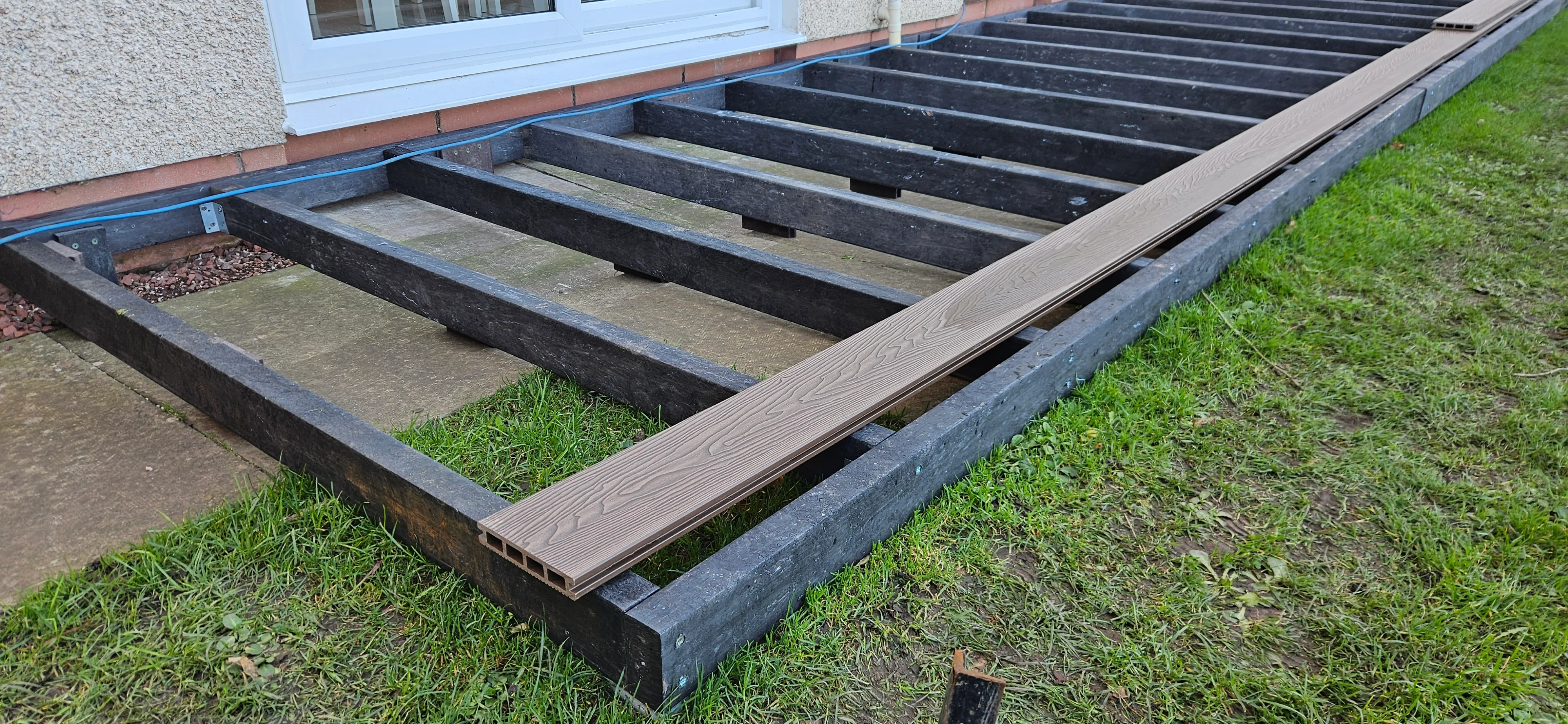
Ezotrade supplies recycled plastic decking joists in three sizes:
| Size | Colour | Price |
|---|---|---|
| 47×97×3100mm | Black | £26.88 |
| 47×97×3100mm | Brown | £28.00 |
| 50×120×3600mm | Black | £34.80 |
The 47×97mm profile suits most residential and light commercial decking projects at standard joist spacings. The 50×120mm profile is suited to larger spans or heavier load requirements.
Installation
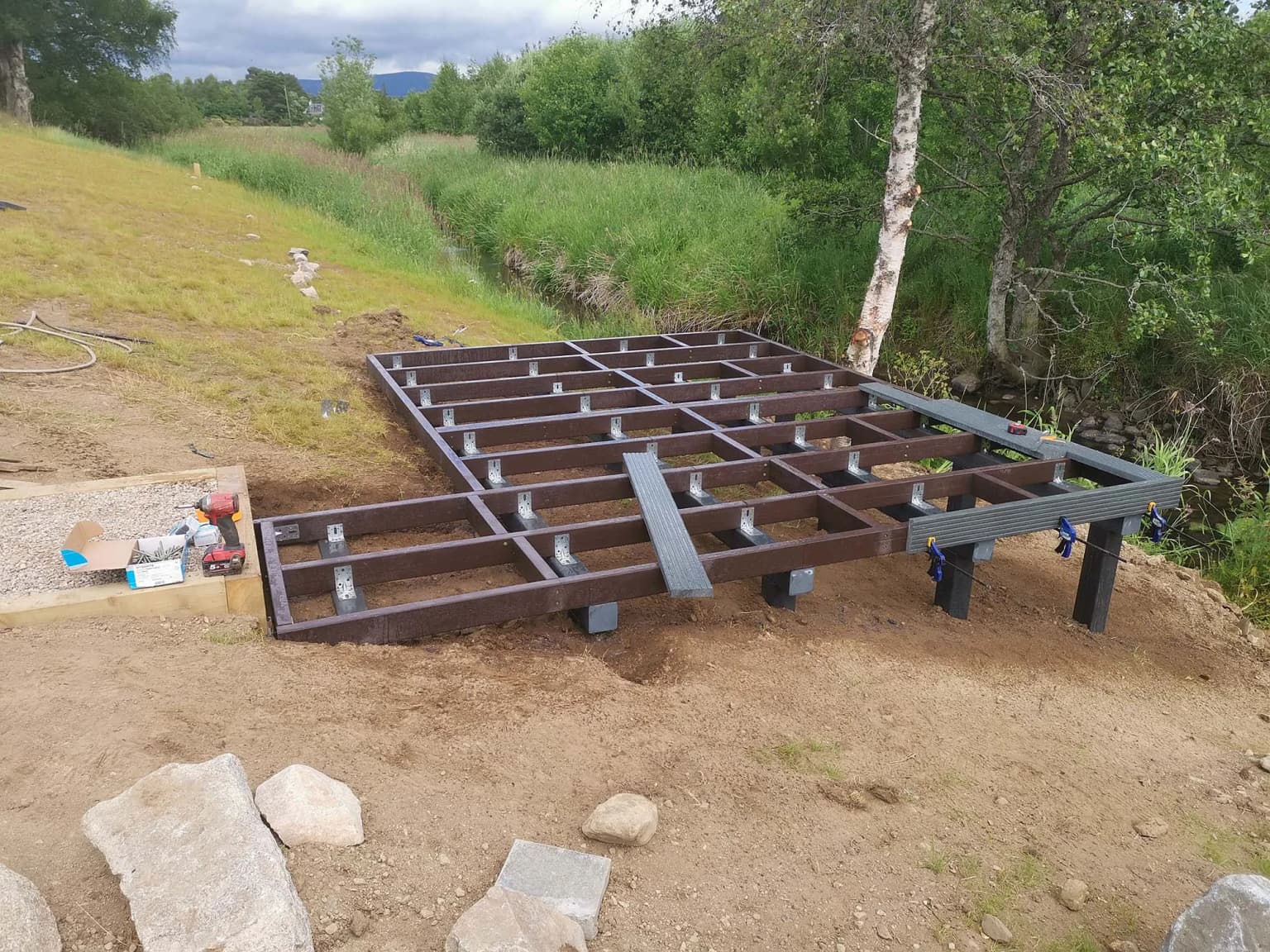
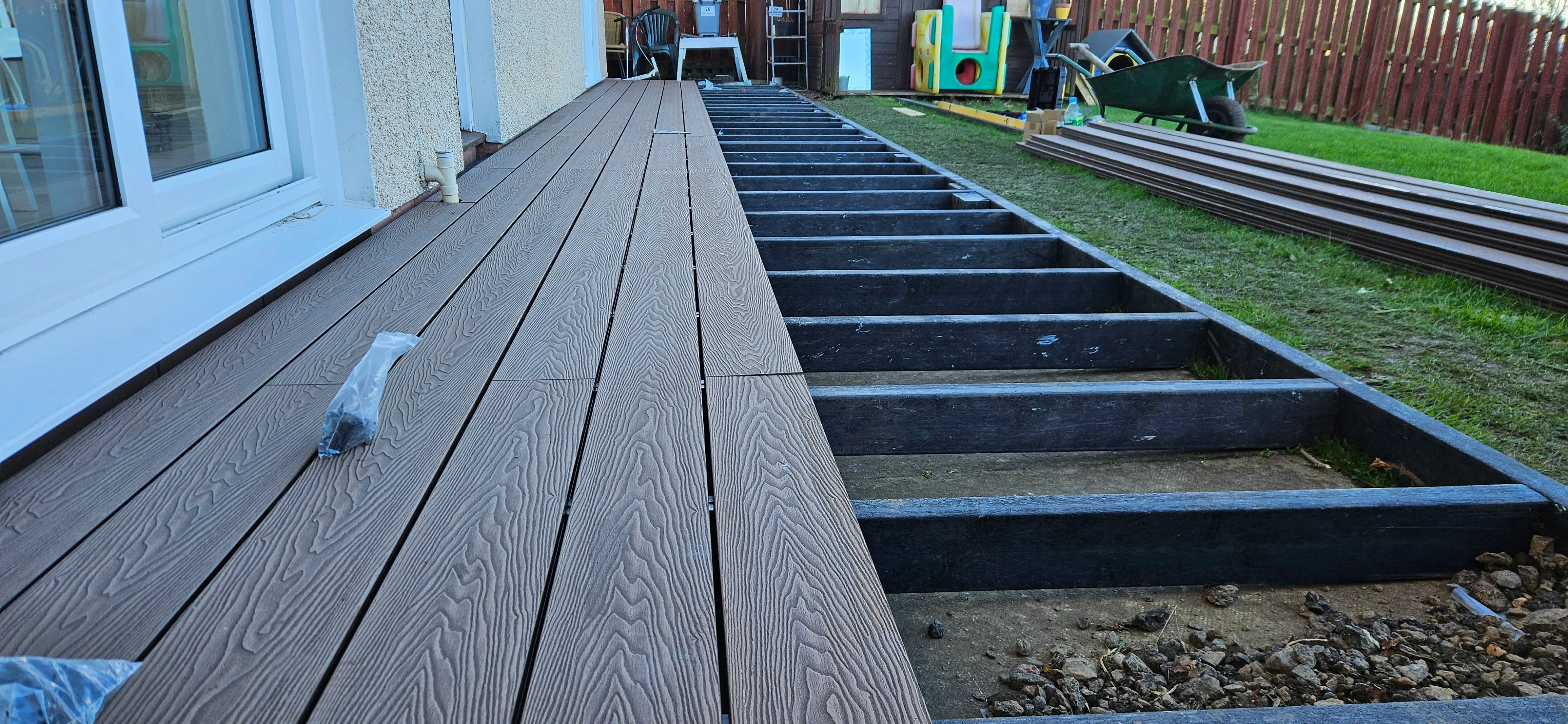
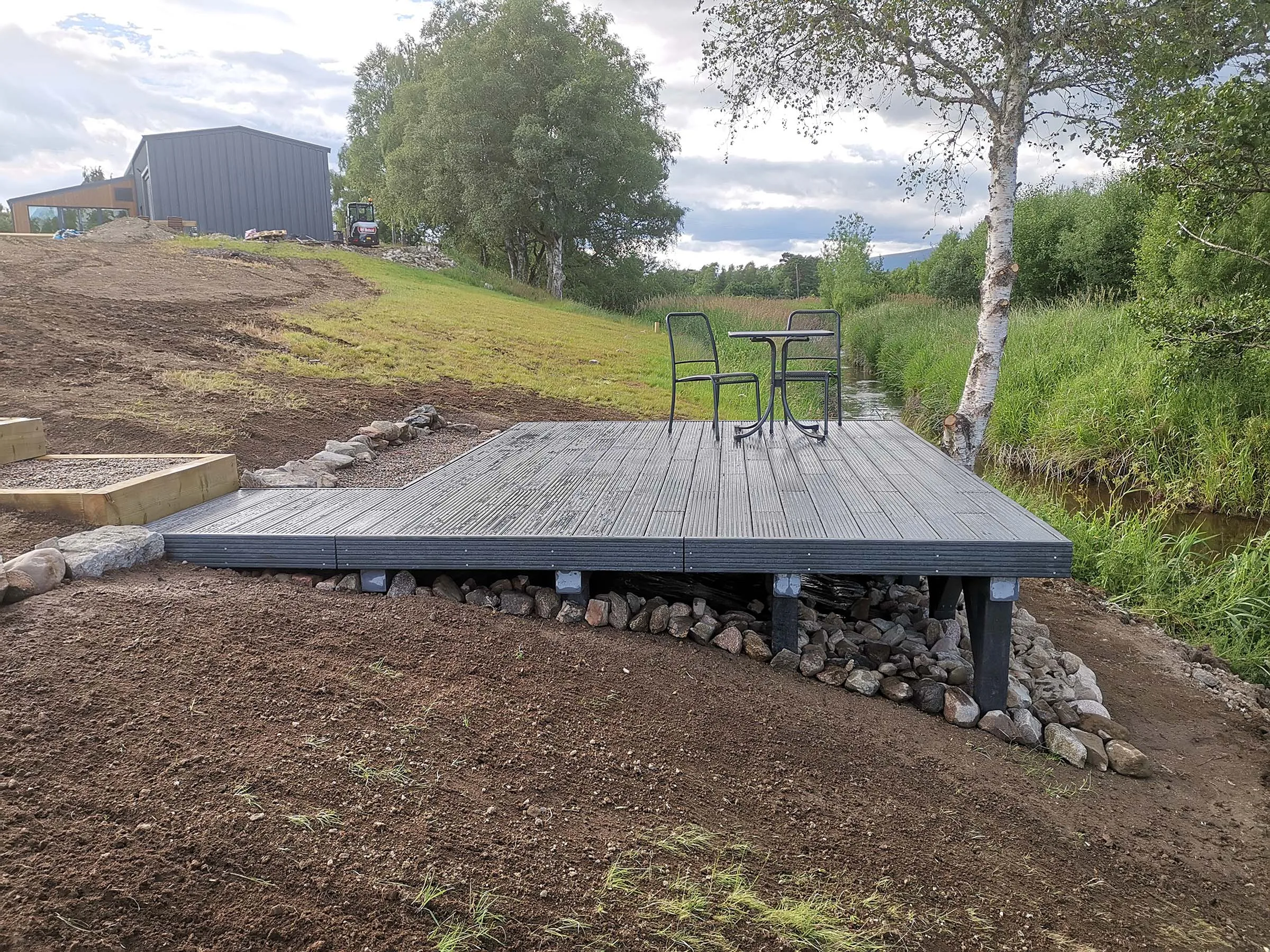
Recycled plastic joists install identically to timber — same fixing methods, same post and bearer system, same joist spacing. There's no specialist knowledge or tooling required.
The one practical difference: leave a small gap (approx. 5mm) at butt joints between joist lengths. Recycled plastic has a low but measurable thermal expansion rate. With tight butt joints on long runs in full sun, you may see minor movement in very hot weather. A 5mm gap eliminates this entirely.
No ground treatment is required at post bases or ground contact points.
A One-Time Decision
A decking subframe should outlast every board laid above it. With recycled plastic joists, it will. You build it once, it requires nothing, and it performs identically in year twenty-five as it did on the day it went in.
The board is what your guests see. The frame is what your deck stands on. Specify it accordingly.
Supply and delivery across the UK. Trade and retail.
📞 020 4619 6390
View decking subframe joists | Contact us for a quote
Ezotrade Ltd — Recycled plastic structural products. UK-wide supply and delivery.