Why Recycled Plastic is Replacing Timber in Modern Construction
For decades, timber has been the default choice for outdoor construction—fencing, decking, agricultural structures, and landscaping. But traditional wood comes with serious limitations: it rots, warps, splits, and requires constant maintenance. In the UK's wet climate, these problems are amplified.
Recycled plastic offers a superior alternative. Made from 100% post-consumer and post-industrial plastic waste, recycled plastic lumber (often called "plastic wood") delivers exceptional durability, zero maintenance, and true sustainability—without the drawbacks of timber.
In this article, we compare recycled plastic and timber across 10 key factors to help you make the best choice for your next project.
1. Durability & Lifespan
Timber (Treated Softwood)
- Typical lifespan: 5-15 years (depending on treatment quality and exposure)
- Common failure modes:
- Rot and decay (especially in ground contact or damp conditions)
- Warping, twisting, and cupping due to moisture absorption
- Splitting and cracking from freeze-thaw cycles
- Insect damage (woodworm, termites in warmer regions)
Recycled Plastic
- Typical lifespan: 25+ years with no degradation
- Failure-resistant:
- Never rots — even in permanent ground contact or underwater
- Never warps, twists, or cups — dimensional stability guaranteed
- Never splits or cracks — flexible under load, impact-resistant
- Insect-proof — no organic material for pests to consume
Winner: Recycled Plastic — Lasts 3-10x longer than timber with no structural degradation.
2. Maintenance Requirements
Timber
- Annual treatment required: Staining, painting, or oiling to protect against moisture and UV
- Inspection needed: Check for rot, loose fixings, and structural integrity
- Replacement costs: Individual boards or posts may need replacing every 3-5 years
- Time investment: 8-12 hours per year for typical garden fence or deck
Recycled Plastic
- Zero maintenance — No painting, staining, sealing, or chemical treatment ever required
- Occasional cleaning: Simple hosing or pressure washing (no absorption, so water rolls off)
- No inspections needed: Material integrity remains constant over decades
- Time investment: 0 hours per year
Winner: Recycled Plastic — Saves hundreds of hours and thousands of pounds over the product's lifetime.
3. Moisture & Weather Resistance
Timber
- Highly susceptible to moisture damage:
- Absorbs water (up to 30% of its weight)
- Swells when wet, shrinks when dry
- Creates gaps in fencing and decking over time
- Rots when water penetrates protective coatings
- UK climate impact: Constant rain and freeze-thaw cycles accelerate decay
Recycled Plastic
- 100% waterproof:
- Zero moisture absorption — no swelling, shrinking, or dimensional changes
- Performs identically in wet and dry conditions
- Ideal for high-moisture environments (waterfront, farmland, wet gardens)
- UK climate advantage: Designed specifically for wet, freeze-thaw conditions
Winner: Recycled Plastic — Engineered for the UK's challenging weather.
4. Structural Strength & Load-Bearing
Timber (Softwood, e.g., C16 Graded Pine)
- Tensile strength: 10-15 MPa
- Flexural modulus: 8000-10000 MPa (rigid but brittle)
- Weakens over time: Rot and moisture reduce load-bearing capacity by 50-70% within 5-10 years
Recycled Plastic (Solid Profiles)
- Tensile strength: 15 MPa (ISO 527-2) — comparable to softwood
- Tensile modulus: 1445 MPa (ISO 527-2)
- Flexural strength: 30 MPa (ISO 178)
- Flexural modulus: 1225 MPa (ISO 178) — more flexible under load
- Impact resistance: 14 KJ/m² (ISO 179) — bounces back from impacts that would crack or split wood
- Consistent performance: Maintains full strength for 25+ years with no degradation
Winner: Tied — Timber is initially more rigid; recycled plastic is more durable and maintains strength over time.
5. Environmental Impact & Sustainability
Timber
- Deforestation concerns: Even "sustainable" forestry removes trees that sequester carbon
- Chemical treatment: Most outdoor timber is treated with toxic preservatives (creosote, arsenic-based compounds)
- Short lifespan = higher replacement frequency: More trees cut, more waste generated
- Carbon footprint: Logging, transport, treatment, and disposal all contribute
Recycled Plastic
- 100% recycled material: Diverts plastic waste from landfills and oceans
- No new fossil resources: Uses post-consumer and post-industrial plastic waste
- 70% lower energy to produce than virgin plastic
- Fully recyclable at end-of-life: True circular economy material
- No toxic chemicals: Safe for humans, animals, soil, and groundwater
Winner: Recycled Plastic — Supports the circular economy, reduces deforestation, and eliminates toxic waste.
6. Cost Comparison (Total Cost of Ownership)
Let's compare a typical 30-metre garden fence over 25 years:
| Cost Factor | Timber (Treated) | Recycled Plastic |
|---|---|---|
| Initial materials | £1,200 | £2,400 |
| Installation | £600 | £600 |
| Annual maintenance (staining, repairs) | £150/year × 25 = £3,750 | £0 |
| Replacements (1 full replacement at 15-year mark) | £1,800 × 1 = £1,800 | £0 |
| Total 25-year cost | £7,350 | £3,000 |
Winner: Recycled Plastic — Saves £4,350 over 25 years (59% lower total cost).
7. Installation & Workability
Timber
- Easy to cut and shape: Standard woodworking tools (saw, drill, screws)
- Lightweight: Easy to transport and handle on-site
- Familiar to contractors: Most tradespeople have timber experience
- Considerations: Must pre-drill to prevent splitting; fixings can rust and stain
Recycled Plastic
- Cut with standard tools: Circular saw, jigsaw, mitre saw (use fine-tooth blades)
- Heavier than timber: Denser material (but still manageable for 2-person teams)
- Pre-drill recommended: Prevents cracking near edges
- Stainless fixings required: Standard screws work, but stainless steel prevents rust stains
- Learning curve: 1-2 projects to become familiar with material behavior
Winner: Timber (slight edge) — Easier for first-time users, but recycled plastic is simple once you know the basics.
8. Safety & Toxicity
Timber
- Chemical preservatives: Most outdoor timber contains toxic substances:
- Creosote (banned for residential use but still found in old structures)
- Copper-based treatments (CCA, ACQ) — harmful to aquatic life, leaches into soil
- Splinters: Common injury risk, especially on decking and handrails
- Fire risk: Highly combustible
Recycled Plastic
- No toxic chemicals: Safe for humans, pets, livestock, and soil
- Splinter-free: Smooth surface eliminates injury risk
- Fire resistance: Class E (low combustibility, self-extinguishing)
- Animal-safe: Ideal for equestrian fencing, livestock enclosures, and kennels
Winner: Recycled Plastic — Non-toxic, safe for all applications, and meets fire safety standards.
9. Aesthetic Options
Timber
- Natural grain: Warm, organic appearance
- Stain/paint options: Can be customized to any color
- Ages to grey: Untreated timber weathers to silvery-grey patina
Recycled Plastic
- Color options: Brown, grey, black (molded-in color, no painting needed)
- Woodgrain texture: Available on some profiles for timber-like appearance
- Color stability: UV inhibitors prevent fading; color lasts 25+ years
- Modern aesthetic: Clean, consistent finish ideal for contemporary designs
Winner: Personal preference — Timber suits traditional aesthetics; recycled plastic offers low-maintenance modern appeal.
10. Applications & Use Cases
Best for Timber
- Interior projects: Where moisture is controlled and maintenance is manageable
- Temporary structures: Short-term installations where lifespan isn't critical
- Traditional aesthetics: Historic buildings or period-accurate restorations
Best for Recycled Plastic
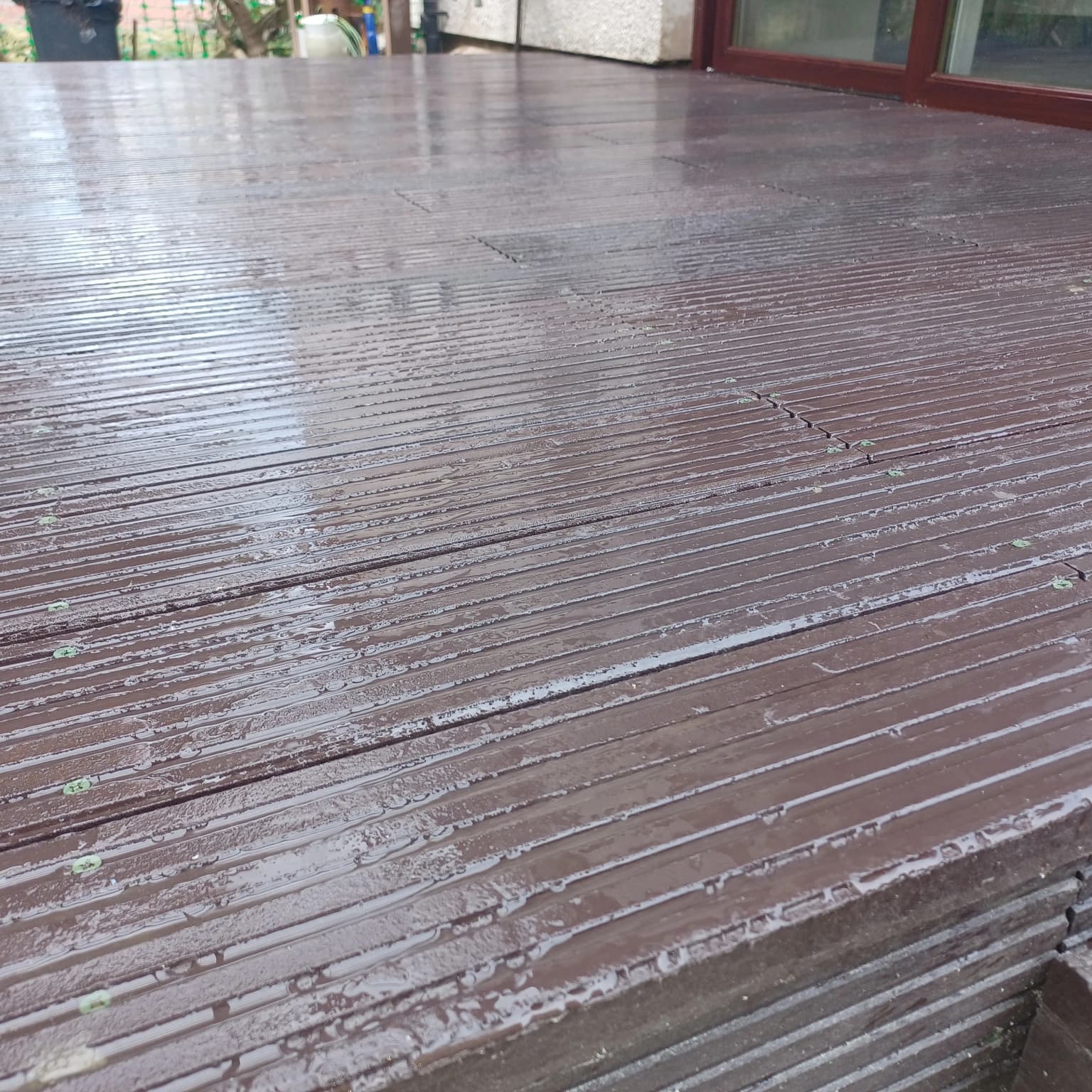
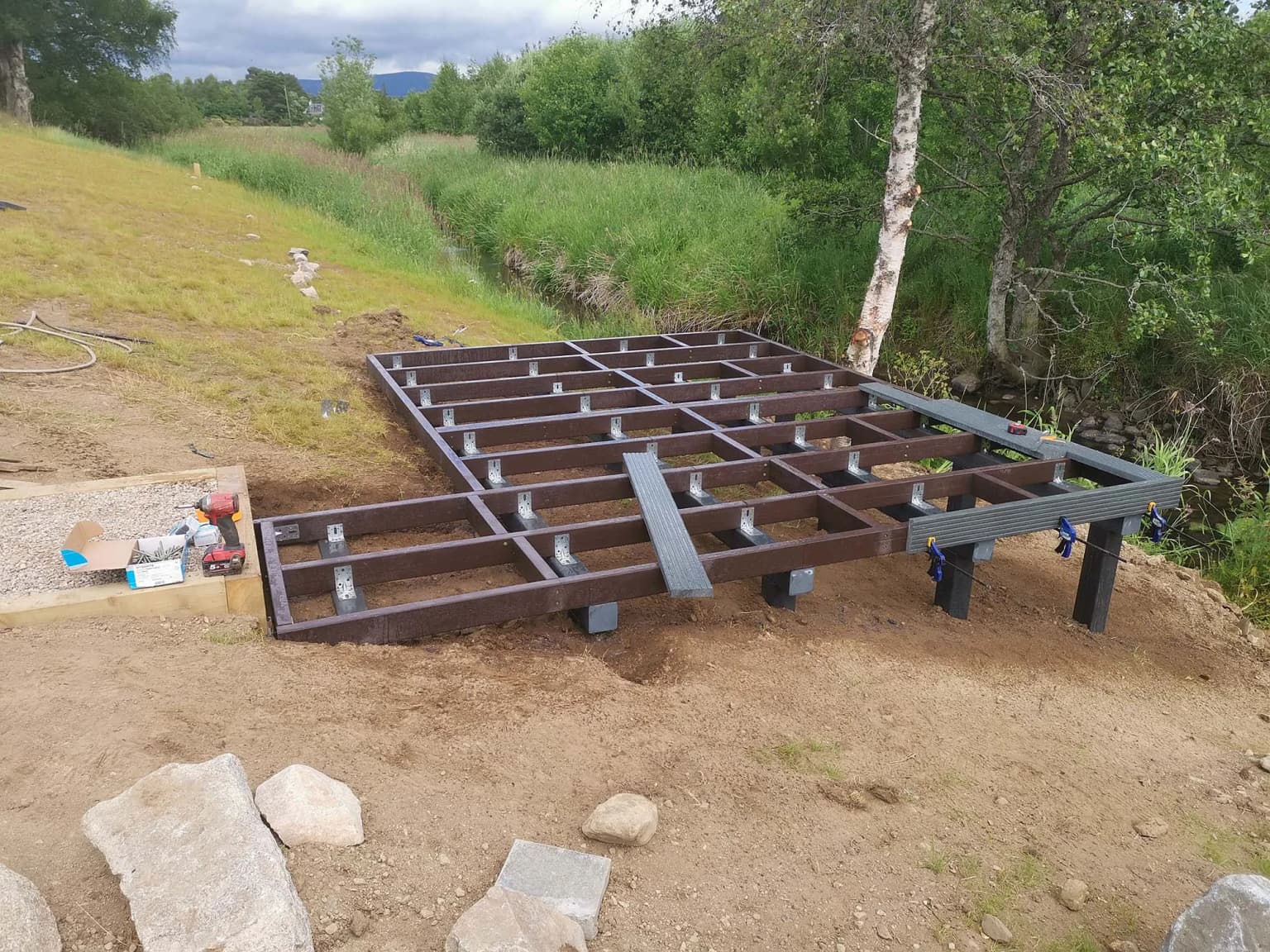
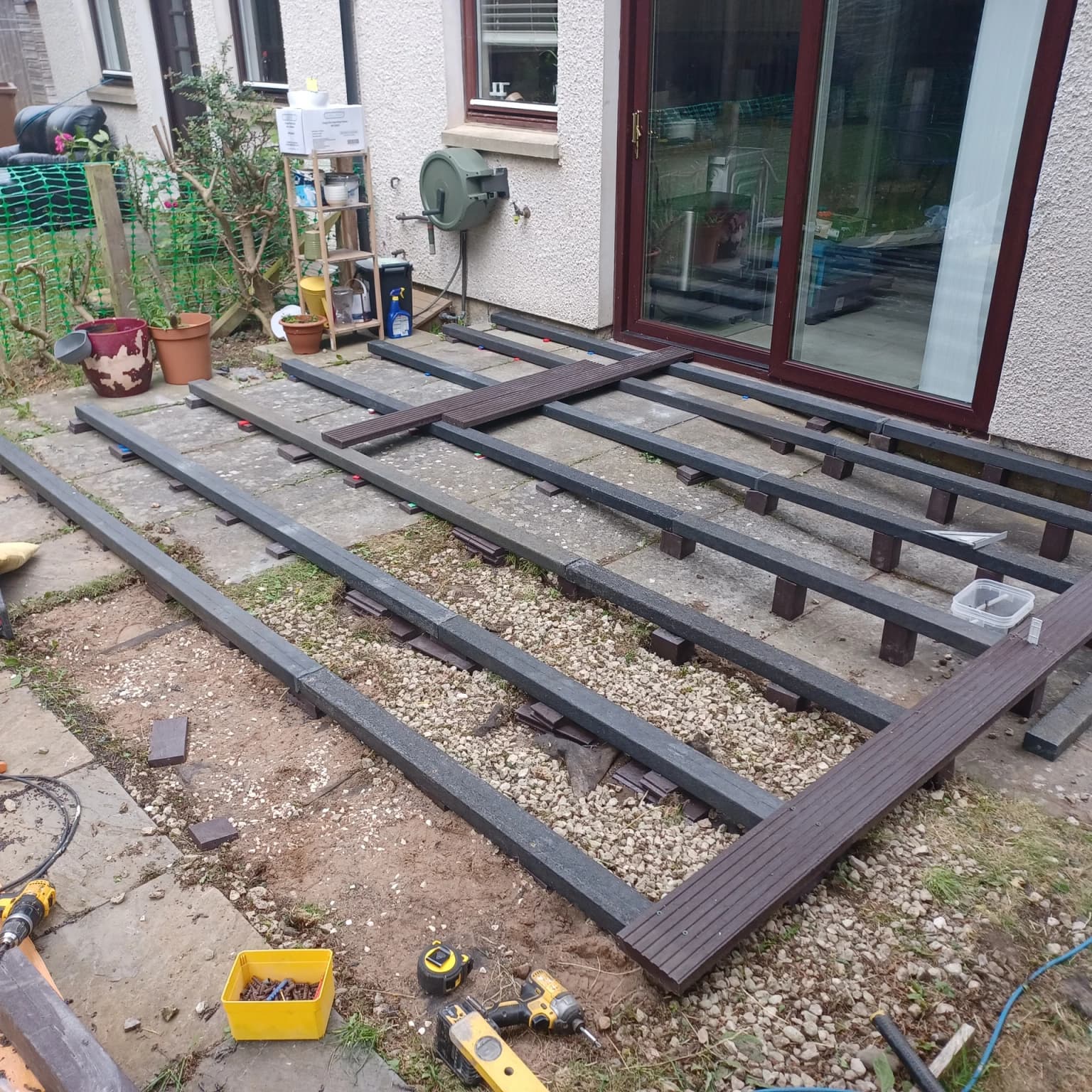
- Permanent outdoor structures: Fencing, decking, boardwalks, pergolas
- High-moisture environments: Waterfront, marshland, wet gardens
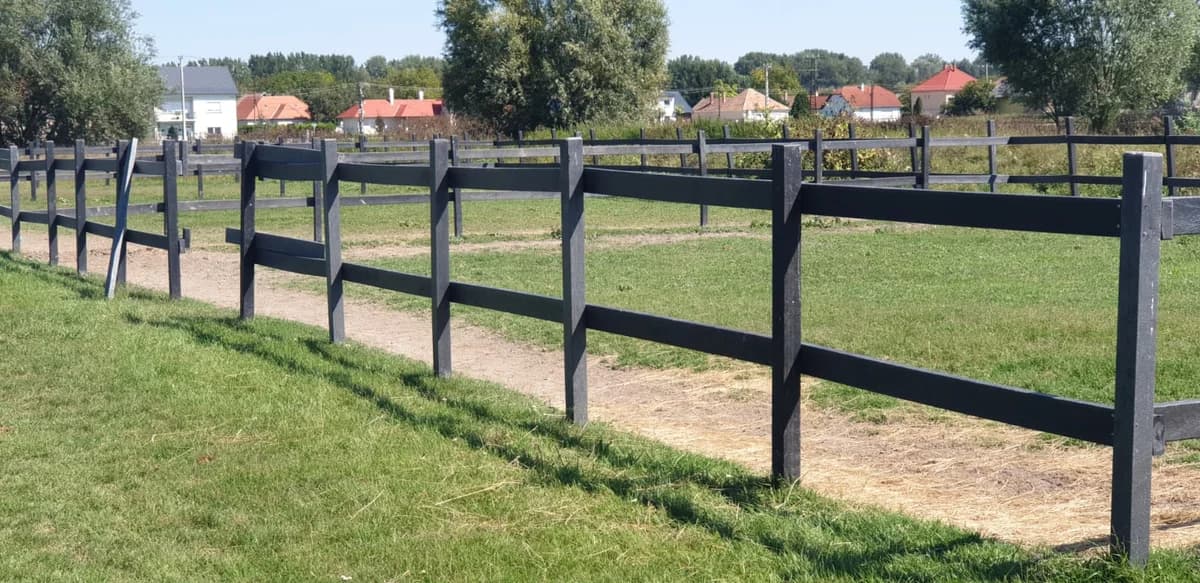
- Agricultural & equestrian: Paddocks, stables, animal enclosures
- Commercial & municipal: Parks, public walkways, council estates
- Ground-contact applications: Posts, retaining walls, foundations
Winner: Recycled Plastic — Superior for any long-term outdoor project.
Final Verdict: Why Recycled Plastic Wins
| Category | Timber | Recycled Plastic |
|---|---|---|
| Durability | 5-15 years | 25+ years |
| Maintenance | High (annual) | Zero |
| Weather resistance | Poor (rots, warps) | Excellent (waterproof) |
| Total 25-year cost | £7,350 | £3,000 |
| Environmental impact | Deforestation + chemicals | Circular economy + waste diversion |
| Safety | Splinters + toxins | Non-toxic + splinter-free |
For UK construction projects, recycled plastic outperforms timber in 8 out of 10 categories. The only areas where timber has an edge are:
- Lower upfront cost (but 5x higher total cost over time)
- Easier installation for first-time users (but minimal learning curve for plastic)
Make the Switch to Recycled Plastic
If you're planning a new fencing, decking, or agricultural project, recycled plastic is the smart choice. You'll save money, eliminate maintenance, and support the circular economy—all while getting a product that outlasts timber by decades.
Get started today:
- Request product samples
- Get a quote for your project
- Speak to our technical team about installation best practices
Keep Reading
- Why Recycled Plastic Outlasts Timber: Durability, Moisture & Lifecycle Facts
- Solid Plastic Decking Boards: The Ultimate Maintenance-Free Solution
- Recycled Plastic Fence Posts: The Rot-Proof Solution for UK Fencing
Shop Related Products
Ezotrade Ltd — Supplying 100% recycled plastic building materials across the UK.