Beyond Decking: Raised Beds, Retaining Walls & Modular Garden Structures
Ezotrade's recycled plastic subframe system is not just a decking base — it's a structural landscaping solution for modular, long-lasting gardens.
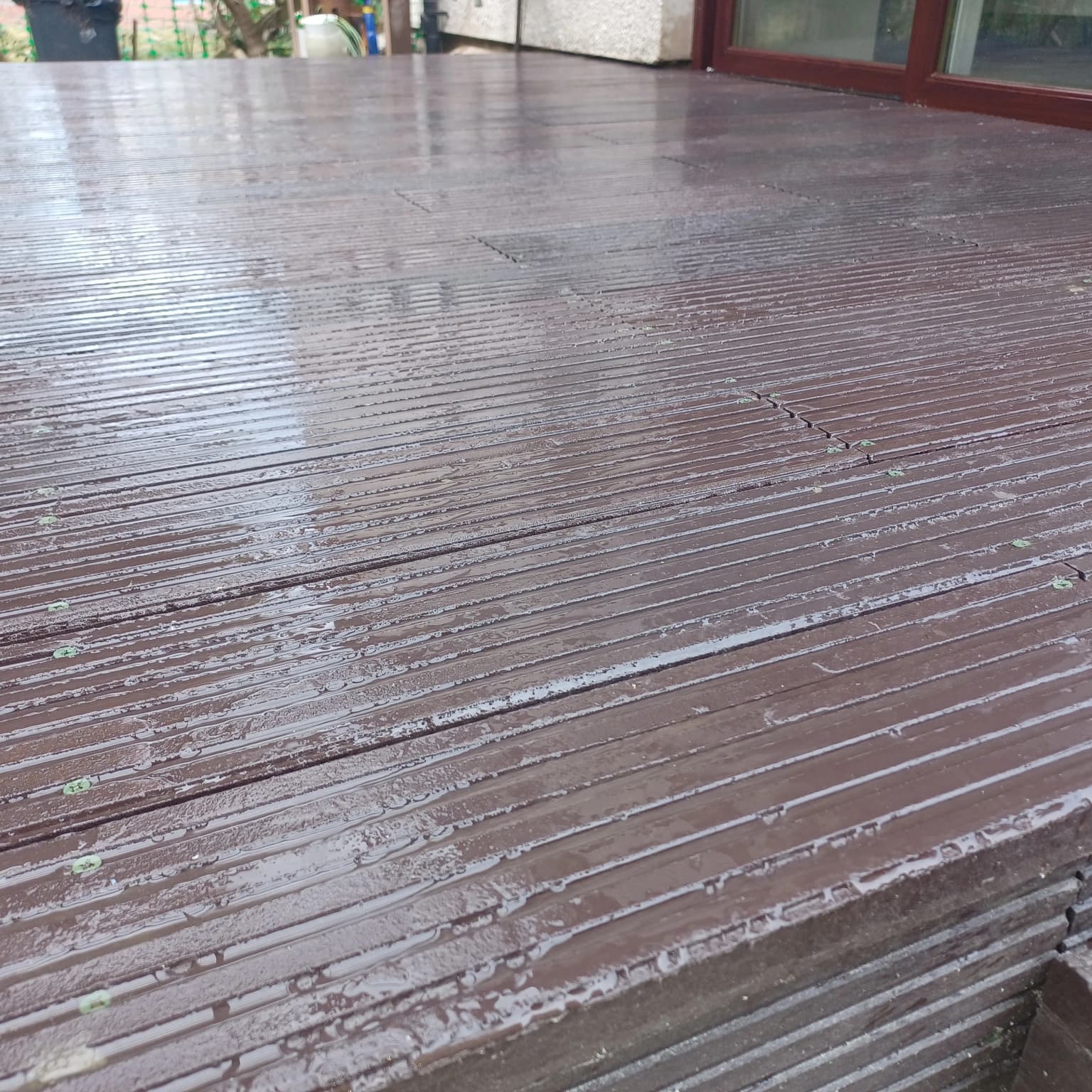
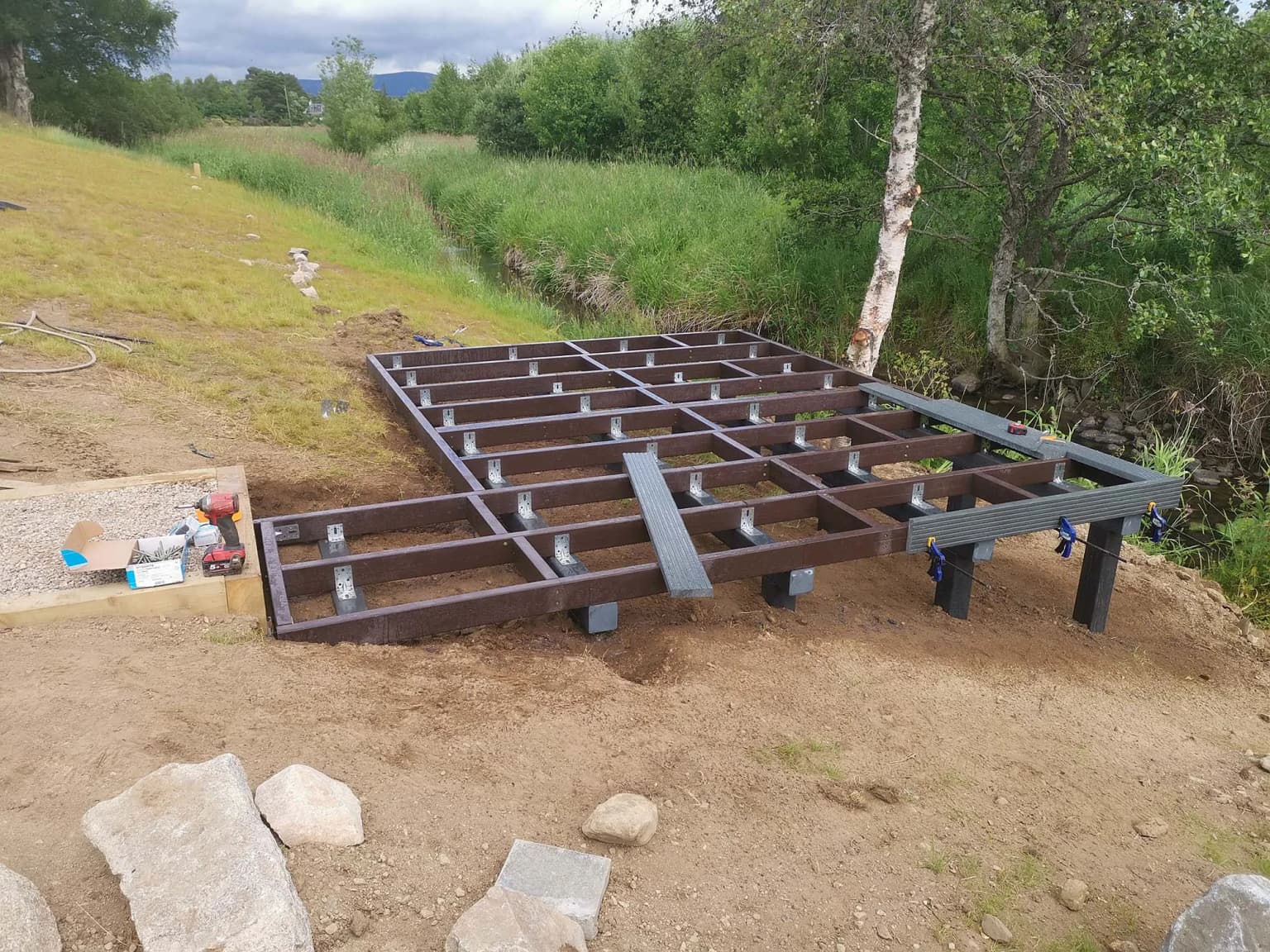
Most people encounter recycled plastic structural profiles in the context of a deck subframe — the joists and posts hidden underneath the boards. It's a logical starting point. The material is dimensionally stable, rot-proof, and zero maintenance. For a subframe that lives in damp ground contact, it outperforms treated timber in every meaningful way.
But the properties that make these profiles ideal for decking subframes are exactly the properties that make them useful for almost any outdoor structural application. Rot-proof. Waterproof. Dimensionally stable. Cut to length on site. Drilled and fixed with standard tools.
Once you stop thinking of the product as "a decking component" and start thinking of it as "a structural section that happens to be weatherproof", a much wider range of applications opens up.
Key properties that apply across all applications:
- Direct soil contact with no timber decay
- No chemical treatments — safe around vegetables, herbs, and livestock
- Structural strength for vertical growing and soil retention
- Modular: expandable, demountable, and reconfigurable
- 25+ year lifespan — build once
- Made from 100% recycled plastic, no chemical leaching into soil
Raised Beds That Never Rot
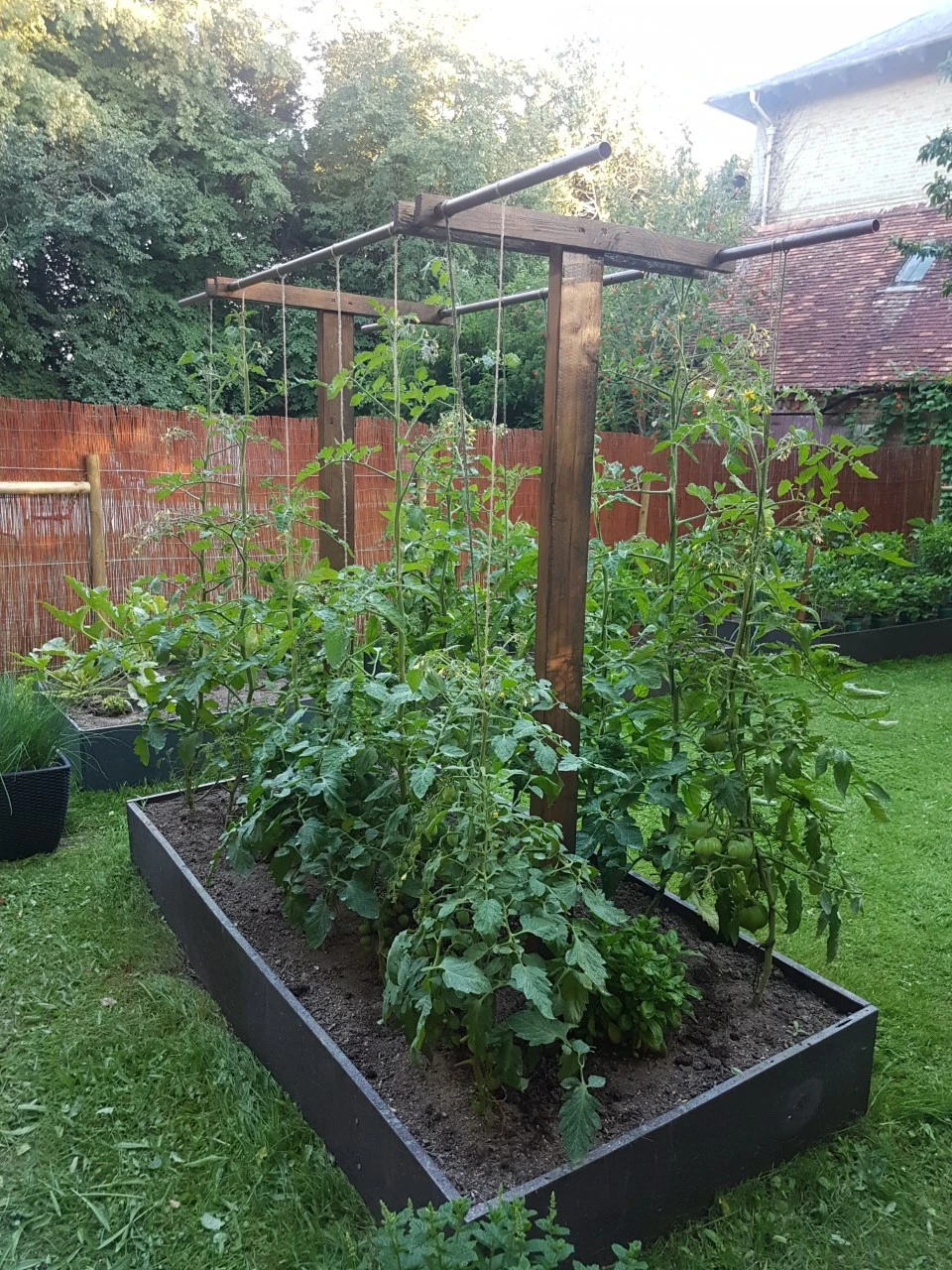
Timber raised beds are one of the most common DIY garden projects in the UK — and one of the most frequently replaced. Even treated sleepers in direct soil contact have a realistic lifespan of 5 to 8 years before swelling, bowing, and decay make them unsightly or structurally weak.
The core problem is unavoidable with timber: raised beds hold damp soil against the internal face of the boards continuously. Water sits at the base. The material never dries out. Treatment helps, but it doesn't solve the fundamental issue — and it introduces preservative chemicals into soil where you're growing food.
Recycled plastic profiles eliminate this problem entirely. The material absorbs zero moisture. It does not swell when the bed is filled with wet compost, and it does not shrink and warp over dry summers. The boards stay flat, flush, and structurally sound year after year.
Why raised beds are an ideal application:
- Soil contact is constant and wet — exactly the condition that destroys timber fastest, and has no effect on recycled plastic
- Food safety — no chemical preservatives leaching into your growing medium. Safe for vegetables, herbs, fruit, and anything you intend to eat
- Dimensional stability — boards stay flat under the lateral pressure of compacted compost. No bowing, no gaps appearing between courses
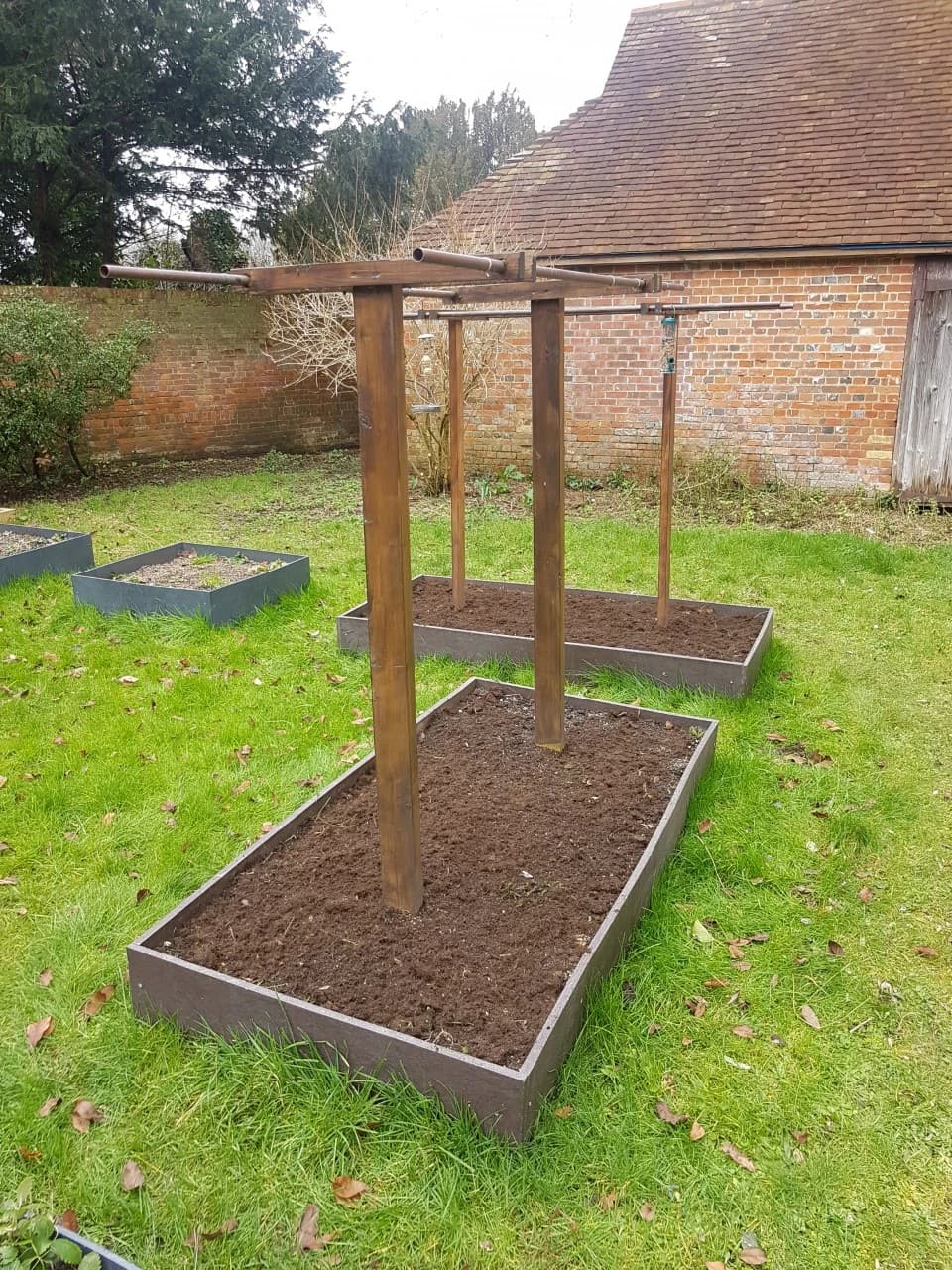
- Any configuration — rectangular beds, L-shapes, tiered systems, accessible height beds on legs. The material cuts and fixes like timber, so any design you can sketch, you can build
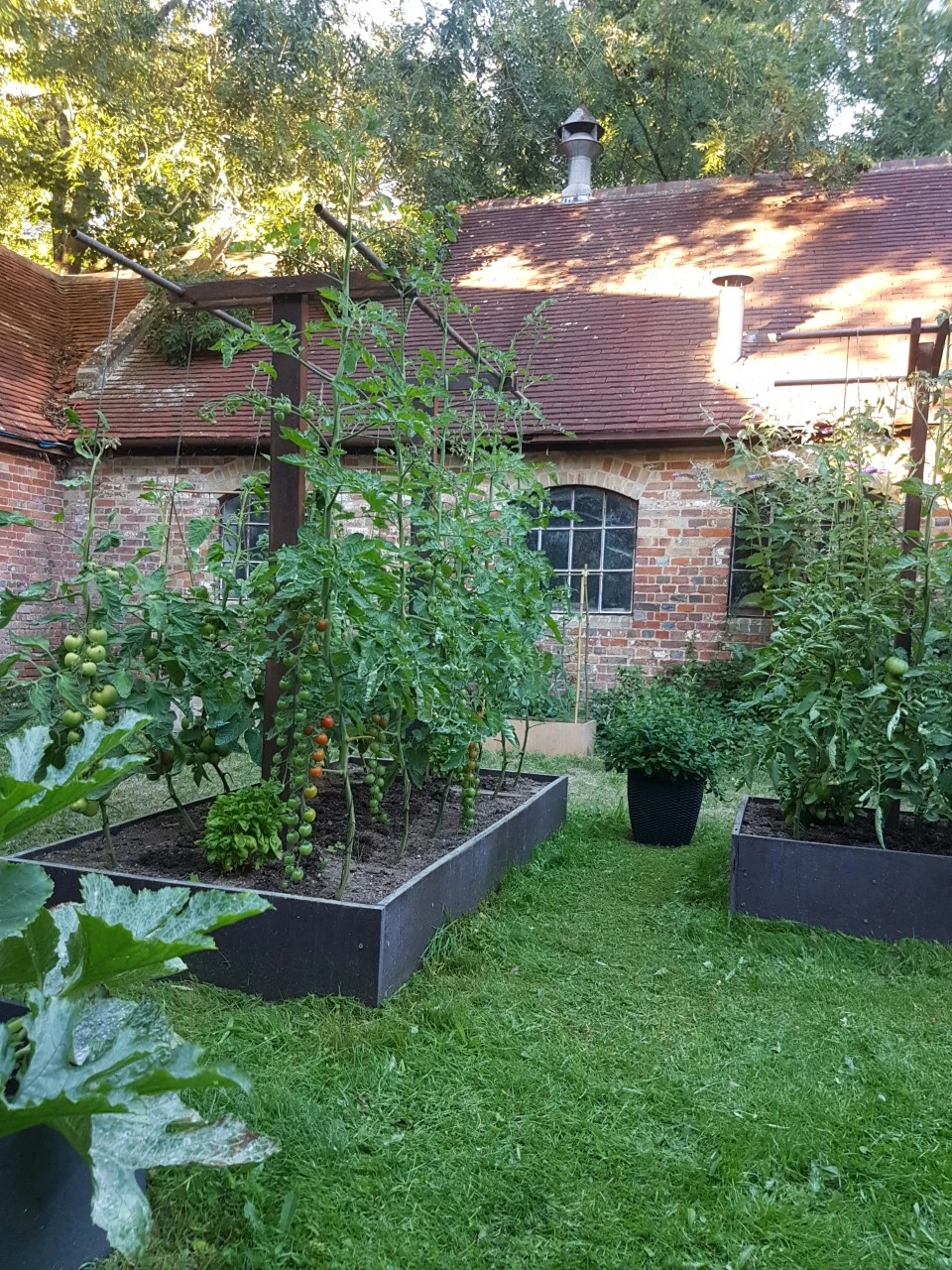
Building a Raised Bed: Key Practical Points
Corner construction is typically the critical point in any raised bed. Options with recycled plastic:
- Corner posts: A vertical corner post section (75mm × 75mm or 100mm × 100mm) provides a solid fixing point for horizontal boards. Bolt boards through the post face with stainless steel bolts and washers.
- Mitred corners: Boards can be mitred at 45° and fixed with internal angle brackets. More labour-intensive but gives a cleaner visual finish.
- Stacked courses: Simply stack horizontal boards against corner posts, fixing each course independently. Fast to build and easy to increase height later.
Use stainless steel fixings throughout — the combination of damp soil and recycled plastic makes corrosion from standard zinc-plated screws a visible problem within a year or two.
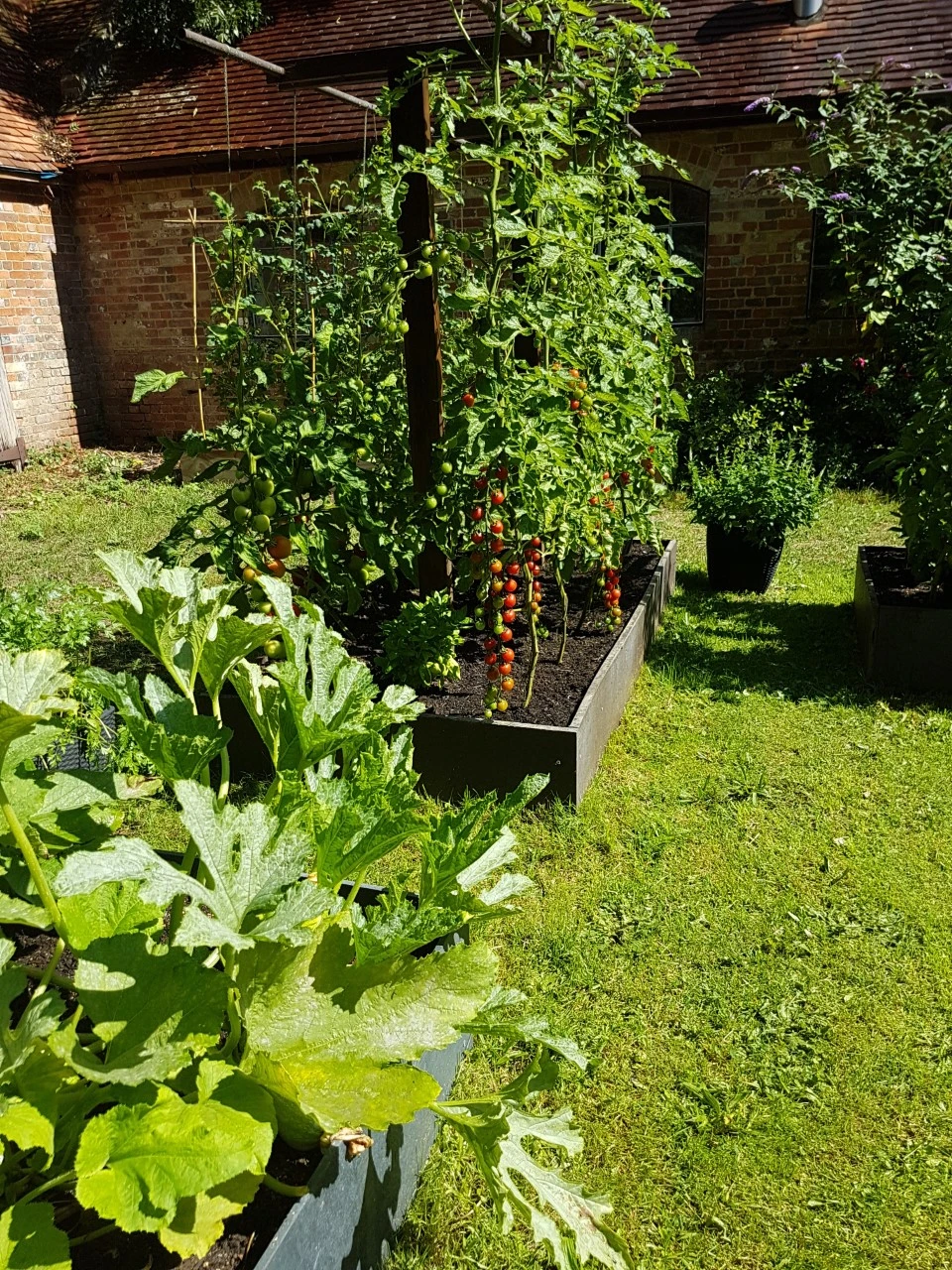
Tomato Frames & Vertical Growing Structures

Vertical growing structures — tomato frames, bean poles, cucumber supports, espalier frameworks — are typically built from timber, bamboo, or metal. Each has its drawbacks: timber rots, bamboo breaks down after one or two seasons, metal corrodes and is expensive.
Recycled plastic profiles offer a more durable alternative. The material is stiff enough to support climbing plants and the weight of fruiting crops, flexible enough to absorb wind loading without cracking, and completely unaffected by the moisture that comes with garden growing structures.
Practical configurations for vertical growing:
- Single-bay tomato frame: Four vertical posts (50mm × 50mm or similar) at the corners of the bed, with horizontal rails at 400–600mm intervals. Tie plants to the rails or thread twine between fixings.
- Multi-bay growing structure: Extend the post-and-rail system across the full length of a raised bed to create a continuous growing framework. Separate sections for different crops.
- Lean-to structure: Fix posts at the back of a raised bed and angle rails forward to create a south-facing inclined growing plane — effective for maximising sun exposure on climbing crops.
- Pergola-style frame: A full rectangular structure with posts at each corner and longitudinal rails at the top. Grow squash, courgettes, or cucumbers across the top while using the interior space for lower crops.
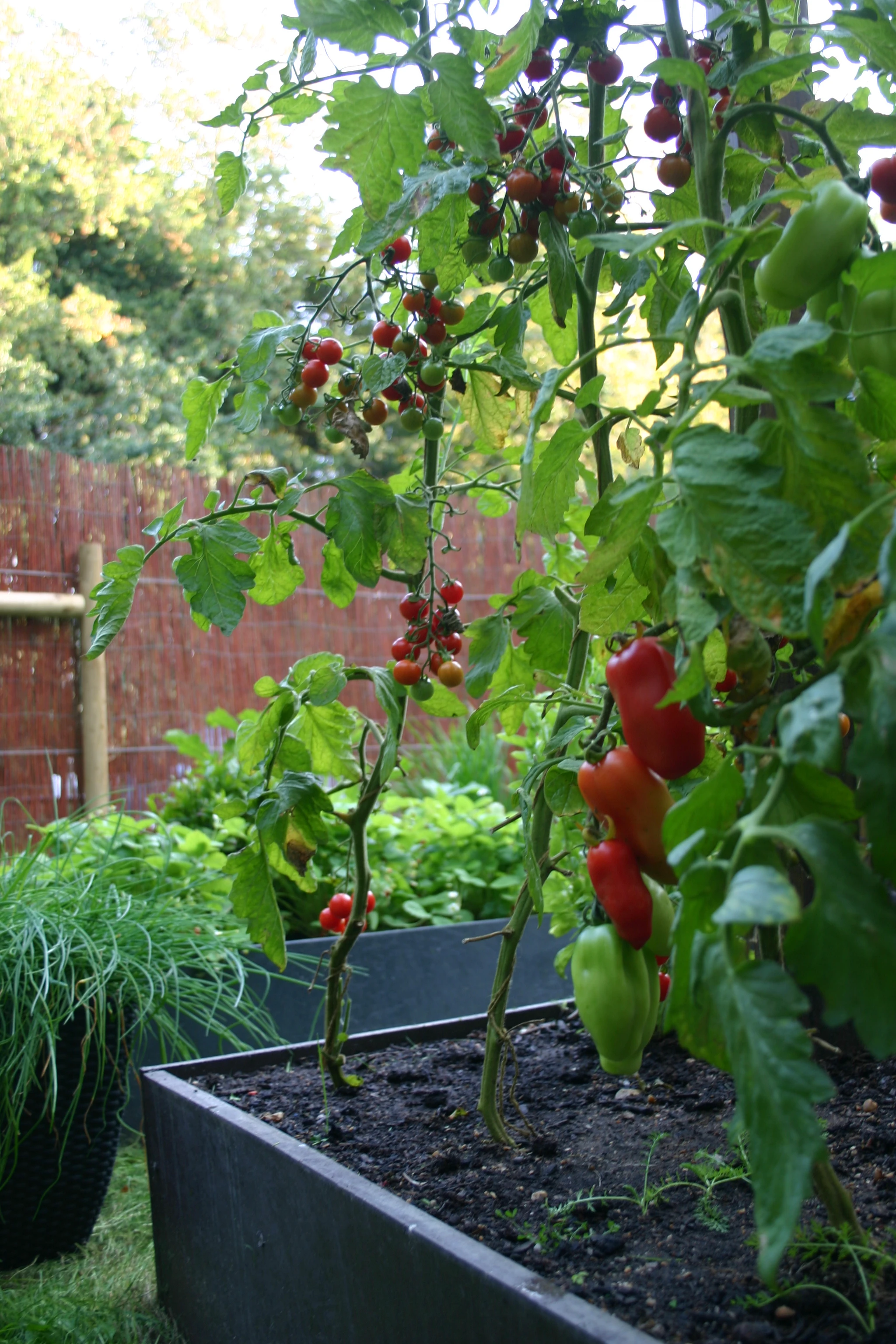
The key installation point for any vertical growing structure: pre-drill all holes before fixing. Recycled plastic is dense — driving screws without a pilot hole risks cracking the material near edges. A 4.5mm pilot hole for a #8 screw, drilled slowly to avoid heat build-up, gives a clean result.
Retaining Walls & Tiered Landscaping
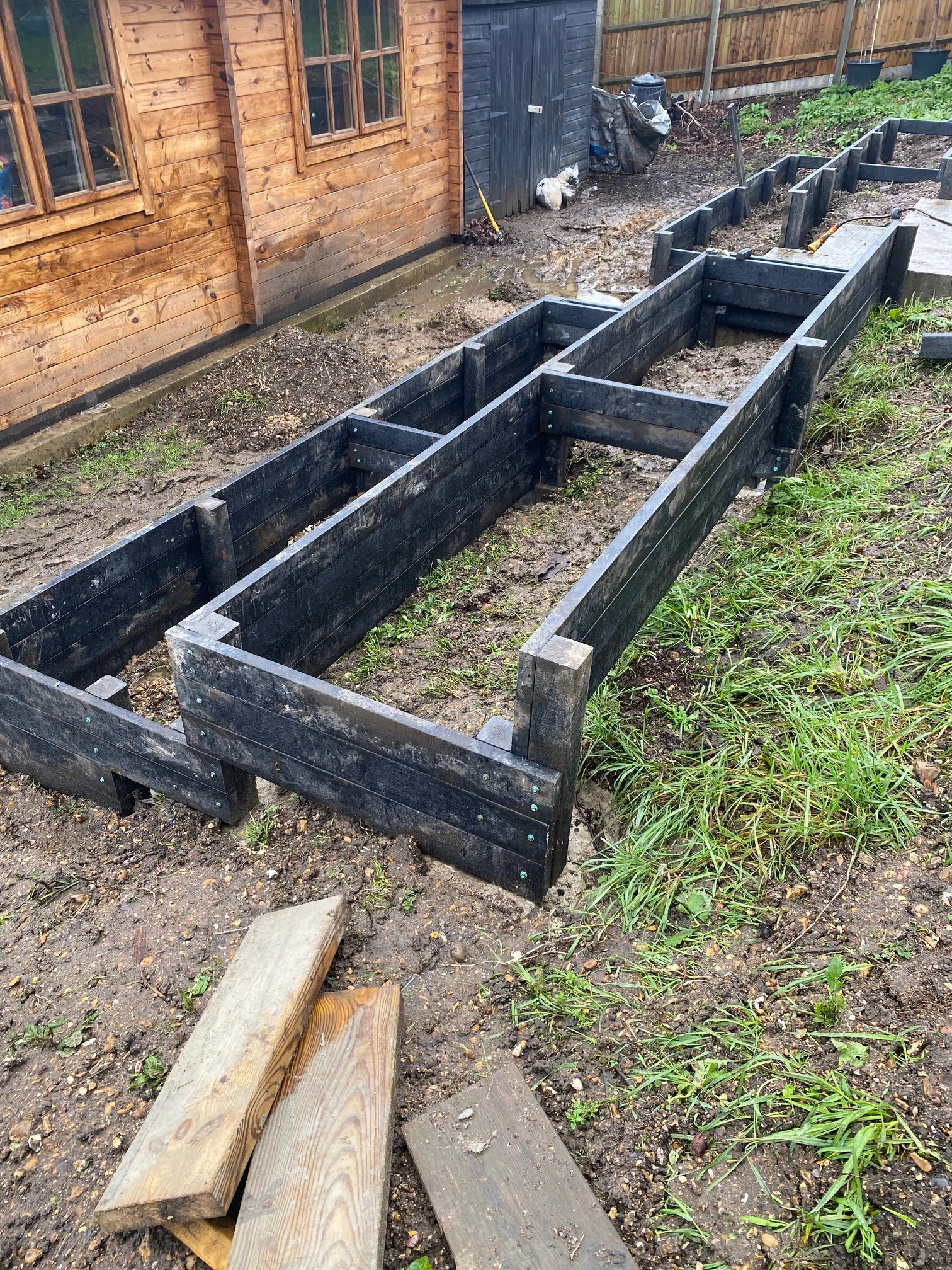
Retaining walls are one of the most demanding outdoor structural applications. The wall must resist continuous lateral soil pressure — pressure that increases with height, with saturation, and with time as soil compacts. Timber sleepers are a popular choice for low retaining walls in UK gardens, but they share the same fundamental weakness as all timber in soil contact: they rot, and when they do, they fail structurally.
Recycled plastic profiles are unaffected by soil contact. There is no rot, no insect damage, no structural compromise from the wet soil pressing continuously against the inner face of the wall.
Design principles for recycled plastic retaining walls:
- Height limit for unbraced walls: A single vertical board construction is suitable for walls up to approximately 600mm. For anything taller, incorporate vertical posts at 1.0m–1.5m centres, with boards spanning between them horizontally. The posts take the bending load; the boards act as facing panels.
- Deadmen anchors: For walls retaining significant depth of soil (600mm+), install horizontal anchors running back into the bank at 1.0m–1.5m vertical spacing. These resist the tendency for the wall to tip forward under soil pressure.
- Drainage: Install a drainage layer (coarse gravel or aggregate) behind the wall, and leave weep holes or gaps between boards at the base. Waterlogged soil is significantly heavier than drained soil — reducing hydrostatic pressure extends wall life and reduces structural demand.
- Post setting: Corner and end posts should be set in concrete for any load-bearing retaining wall. Dig to 600mm minimum, pour postcrete around the post, and allow full cure before fixing boards.
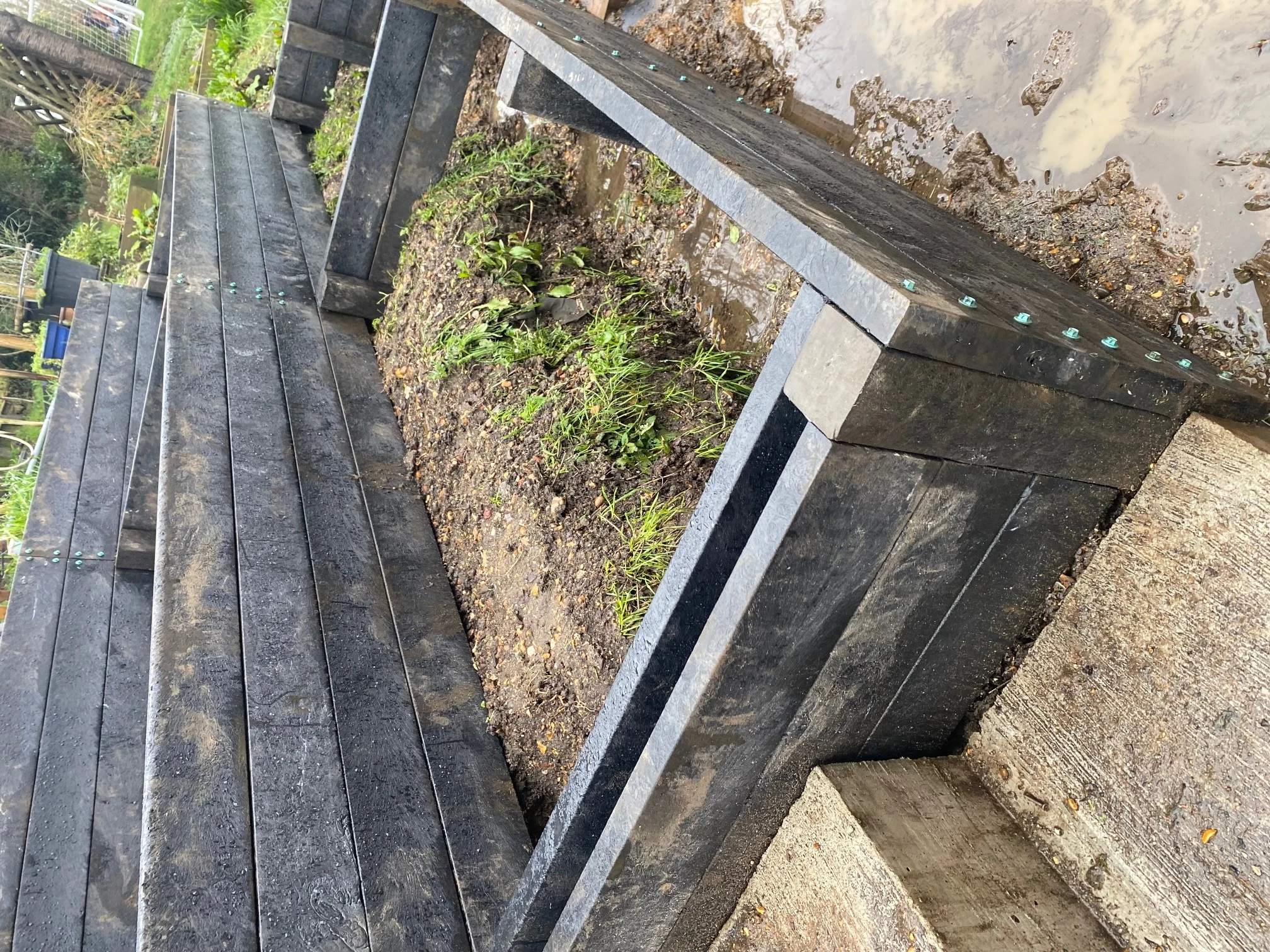
Tiered landscaping — multiple retaining walls creating level planting terraces on a sloped garden — is an excellent application. Each tier is essentially a raised bed retained by a wall. The same profiles serve both functions, giving the garden a consistent, coherent appearance.
Modular & Demountable Garden Design
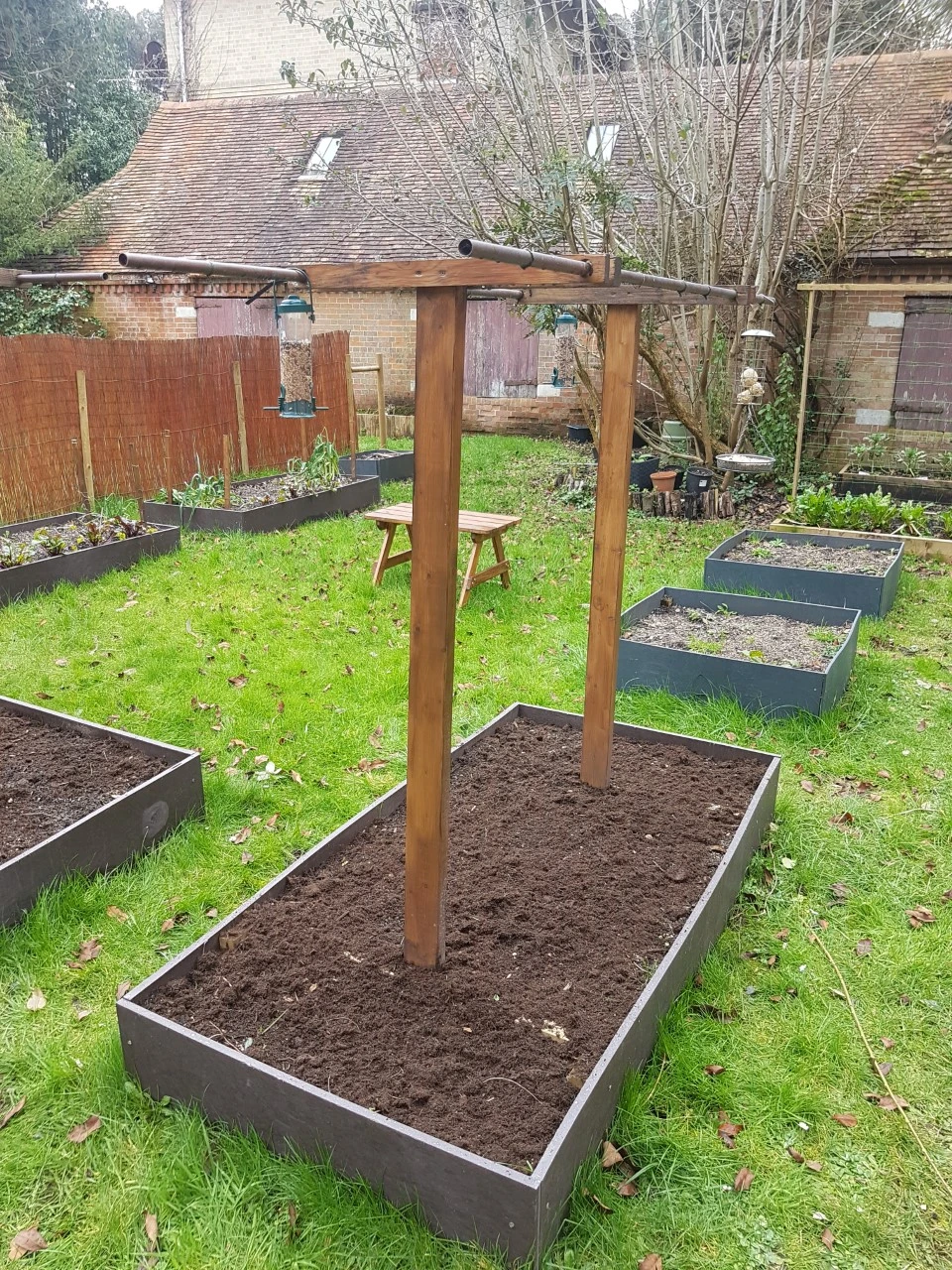
One significant advantage of recycled plastic over cast concrete, stone, or even timber sleepers is demountability. A well-designed recycled plastic garden structure can be disassembled, moved, and reassembled — without any loss of structural performance.
This matters for several practical reasons:
- Rented properties: Build raised beds, structures, and borders you can take with you when you move. The material has years of life remaining regardless of how many times it's been moved.
- Evolving gardens: Design your garden in modules and change the layout as your needs evolve. Extend a raised bed by adding an extra bay. Reconfigure the height of a retaining wall. Split one large bed into two smaller ones.
- Seasonal structures: Some growing structures (tomato frames, cold frames, climbing supports) are seasonal. Build them to be assembled in spring and stored efficiently over winter.
Designing for demountability:
The key principle is to use bolted connections rather than screwed fixings at any joint you may want to disassemble. Bolts with nylock nuts are fully removable and re-usable. Use stainless steel throughout — stainless fixings retain their thread condition in outdoor use, whereas zinc-plated fixings corrode and may become difficult to remove.
Label components if you're planning a complex modular system. Recycled plastic doesn't take pencil marks well, but a paint marker or engraved label applied during assembly makes reassembly much faster.
The Sustainability Angle
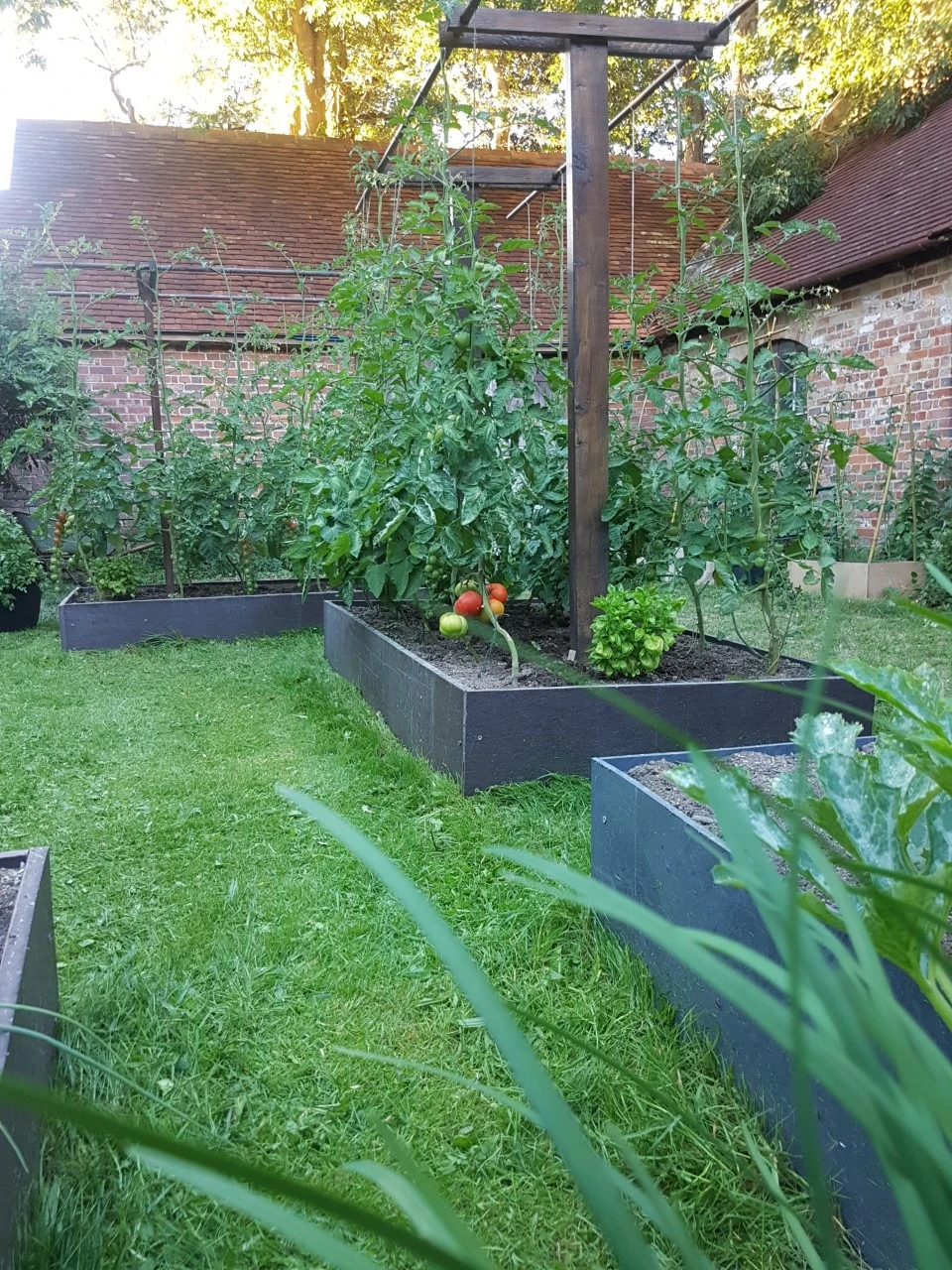
Using recycled plastic profiles for garden structures rather than timber or virgin plastic has a measurable environmental benefit that compounds over the structure's lifetime.
Waste diversion: Each profile is manufactured from post-consumer plastic waste — typically mixed HDPE from packaging, agricultural film, and similar waste streams. Material that would otherwise go to landfill or incineration is instead locked into a product with a 25+ year service life.
No chemical treatments: Timber raised beds and structures are typically treated with preservatives to slow rot. These treatments leach into soil over time — a significant issue for food growing, and a source of chemical contamination in gardens and allotments. Recycled plastic requires no treatment and leaches nothing.
Longevity as sustainability: The most sustainable product is often the one you replace least frequently. A recycled plastic raised bed that lasts 25 years replaces three or four timber beds over the same period — each of which required felling, processing, treating, transporting, and eventually disposing of.
Recyclability at end of life: Solid recycled plastic profiles can potentially be recycled again at the end of their service life. The material is homogenous — unlike composite products, there are no mixed materials to separate. At 25+ years, this is a distant consideration — but it means the circular loop continues.
For gardens where environmental credentials matter — allotments, schools, community growing projects, or anyone pursuing organic certification — the fully documented recycled content and absence of chemical treatments are meaningful, verifiable attributes.
Building Your Own: Where to Start
If you're planning a raised bed, retaining wall, or growing structure from recycled plastic profiles, the starting point is the same as any construction project: calculate your quantities accurately before ordering.
For raised beds, measure the perimeter and multiply by your intended wall height. Add 10% for cutting waste. Decide on your corner construction method (post and board, or mitred) and order corner post sections accordingly.
For retaining walls, the height and length of the wall determine the quantity of boards, and the height and soil conditions determine whether and how many vertical posts you need.
We can help you with:
- Material quantities — tell us your dimensions and we'll calculate what you need
- Profile selection — which section sizes suit your application
- Fixing specifications — the right stainless fasteners for each connection type
Built once. Built sustainably. Built to last.